
WSM | Q3 2025
The content provided on this website, including any communications, posts, videos, social media interactions, and other materials, is for informational and educational purposes only. It should not be considered as financial or investment advice. Read our full disclaimer here.
Links
Link to Transcript
Link to Presentation
Link to 10-Q
Overview
Non-GAAP EPS of $1.96 beats by $0.09.
Revenue of $1.88B (+4.4% Y/Y) beats by $10M.
KEY Takeaways
Comps grew 4% across all brands, and retail stores were especially strong with an 8.5% comp.
Profitability held up really well: operating margin hit 17% and EPS grew 5% to $1.96.
Gross margin expanded to 46.1%, driven by better supply chain execution, fewer damages, fewer split shipments, and strong full-price selling.
Tariffs weren’t fully felt in Q3 due to timing and inventory front-loading, but Q4 will absorb the full impact.
Even with that headwind, management raised full-year operating margin guidance to 17.8%–18.1%.
The balance sheet remains a major strength: $885M in cash, no debt, healthy free cash flow, and aggressive buybacks.
The dividend looks rock solid — $0.66 per quarter, up 16% YoY and now in its 16th straight year of increases.
NOTES
Williams-Sonoma’s (WSM) third quarter showed, yet again, why it continues to stand out in a pretty rough environment and a pretty competitive industry.
Housing turnover is still sitting at multi-year lows, tariffs are still a looming headwind, and consumer spending in home goods has been choppy for most retailers. Despite all of that, WSM still managed to grow comps 4%, expand its margins, and raise its full-year guidance.
Revenue for the quarter came in at $1.88 billion with operating margin at 17%. Plus, earnings per share grew 5% to $1.96. The strength this quarter didn’t come from any one brand, either. Comps were positive across the board.
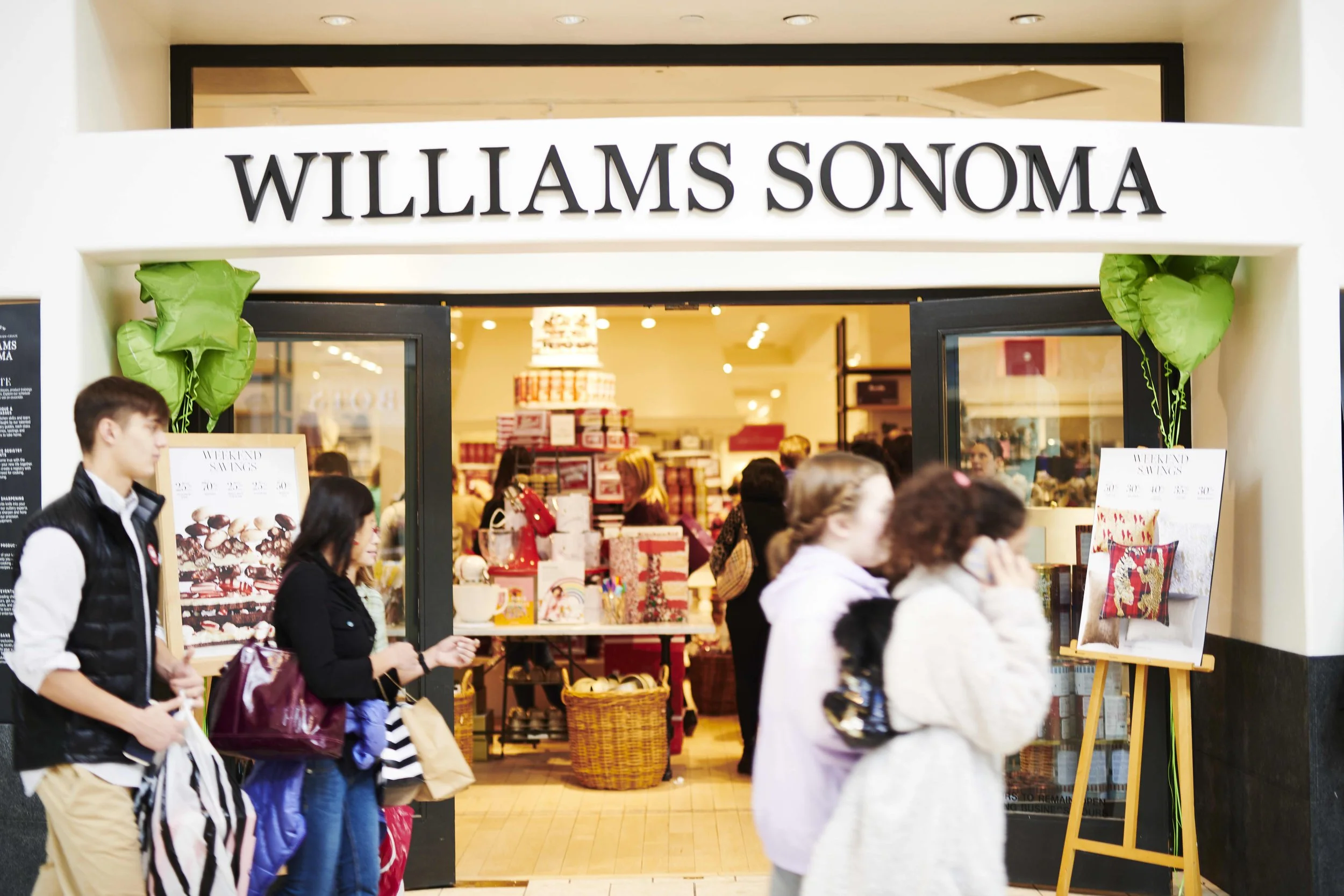
Retail stores especially carried the load with an 8.5% comp, benefitting from improved inventory levels, better merchandising, and meaningful store remodel activity. WSM has remodeled or repositioned more than a dozen stores this year already, and almost all of them are outperforming their old locations.
What really stood out this quarter was how much of the company’s margin strength continues to come from its operational improvements. Gross margin hit 46.1%, up 70 bps from last year.
Like I mentioned earlier, tariffs are undeniably still a headwind, but two things worked in WSM’s favor in Q3: tariff timing (some of the new tariffs hadn’t fully flowed through inventory yet) and their 6-point mitigation plan (vendor concessions, resourcing, supply chain efficiencies, cost control, more Made-in-USA assortment, and strategic pricing).
They also front-loaded inventory ahead of tariff effective dates, which bought them time. Combine that with fewer damages, fewer split shipments, smoother delivery, and lower transportation costs, and you get a company that is creating tangible savings out of its supply chain.
That theme shows up in the balance sheet too. WSM ended the quarter with $885 million in cash and no debt, generated $316 million in operating cash flow, and returned $347 million to shareholders — $80 million through dividends and $267 million in buybacks.
The dividend remains in great shape too at $0.66 per quarter, which is up 16% YoY and marks the 16th straight year of increases. Free cash flow is healthy, the balance sheet is clean, and the capital returns are aggressive. They even added a fresh $1 billion to their buyback authorization.
Going back to tariffs though, the company was pretty clear about their impact moving forward. Q3 benefited from timing quirks, but Q4 will feel the full weight of the new tariff structure.
Their effective incremental tariff rate has doubled this year — from 14% to 29% — and includes a mix of China, India, Vietnam, “rest of world,” and metal tariffs.
Management is confident in their mitigation playbook, but they’re also being realistic: margins will be pressured as the higher-cost inventory flows through. Even with that, WSM raised full-year operating margin guidance to 17.8%–18.1%, which says a lot about how strong the underlying business is.
Outside of the financials, the call spent a decent amount of time talking about AI. WSM has been rolling out real, working AI products — including AI-powered customer service agents that now handle more than 60% of chats with dramatically shorter handle times, and “Olive,” the Williams-Sonoma culinary AI assistant.
Beyond the customer-facing tools, WSM is using AI behind the scenes to reduce shipping costs, reroute deliveries, cut damages, improve forecasting, and increase in-stock rates. Management made a point to say this isn’t theoretical — they’re already seeing SG&A savings because AI is absorbing repeatable work and lowering vendor spend.
Overall, Williams-Sonoma is still a well-run business in a tough environment. The tariff issue is the one big question mark in the short term, but nothing in the numbers suggests the underlying business is weakening. If anything, the company looks like it’s building leverage for when housing eventually turns and demand for big-ticket home goods rebounds.


Revenue of $1.23B (+2.5% Y/Y) misses by $10M. Non-GAAP EPS of $4.94 beats by $0.02.