Disclaimer: This page contains some affiliate links that might just lead you to the promised land of awesomeness (or at least some cool products). I may receive commissions for purchases made through links in this post.
If you spend any time keeping tabs on the stock market, you've likely noticed that financial media tends to talk about the same handful of stocks ad nauseam. And if that's all you pay attention to, you might start to think those are the only stocks worth investing in.
The fact of the matter, though, is that there are thousands of publicly traded companies out there, many of which are great businesses that hardly anyone talks about.
Personally speaking, one of my favorite things to do as an investor is to look for these kinds of hidden gems. It’s like you’re stumbling upon a secret.
One company that was recently brought to my attention is Broadridge Financial Solutions (BR). I'd never heard of it before, but after spending some time looking into the company, I've gotta say, this is a really interesting business.
(P.S. — one of the perks of my job is that I actually find out about a lot of these hidden gems from you guys, Broadridge included. So thank you for that!)
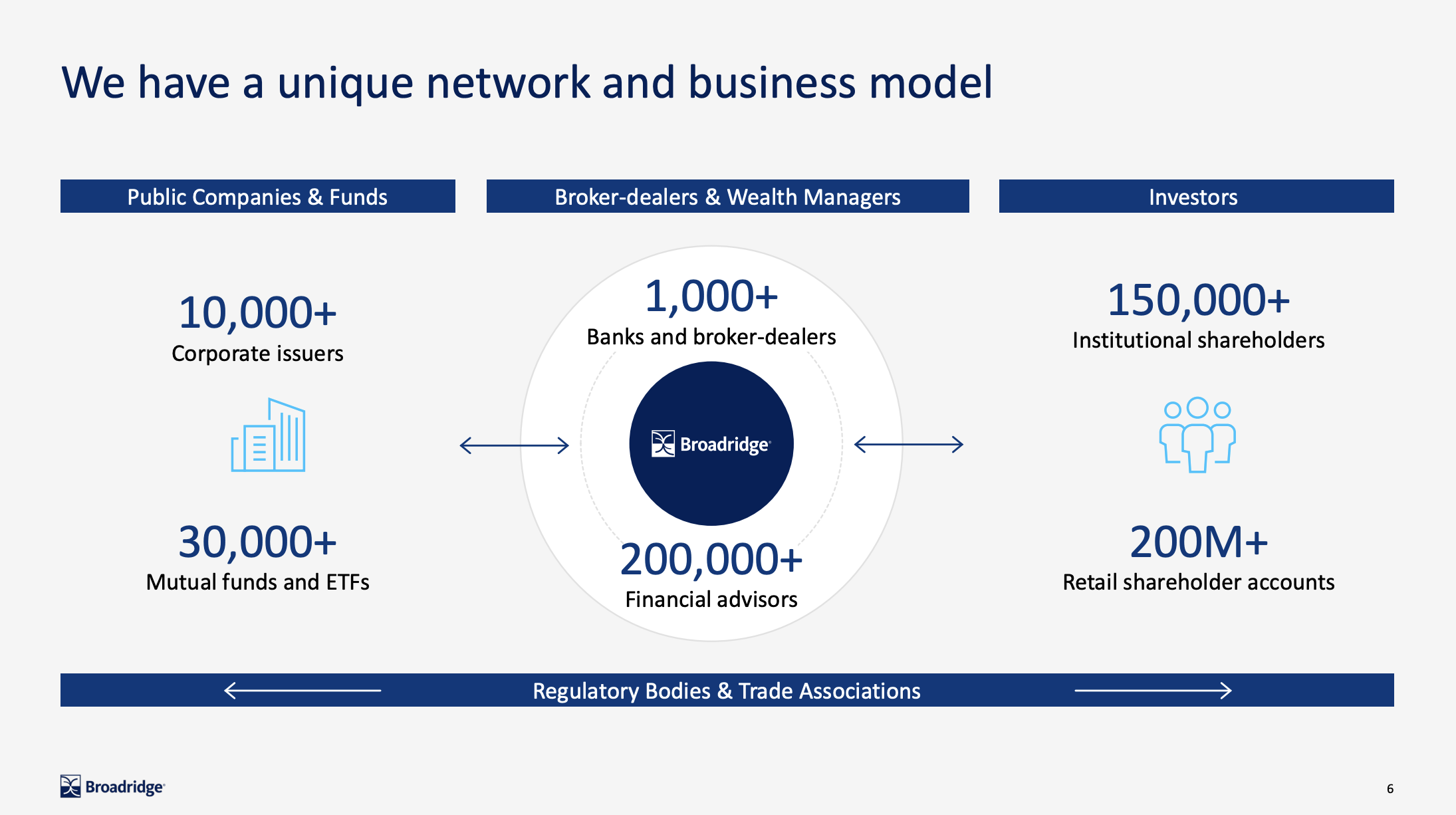
Source: Investor Presentation
Broadridge operates as a sort of invisible monopoly within the financial services industry (with extra emphasis on invisible). In a nutshell, the company provides a lot of the behind-the-scenes infrastructure that banks, brokerages, and other financial institutions rely on to process trades and settlements.
They also play a big role in how publicly traded companies communicate with their shareholders. For example, whenever you receive a proxy voting notification from your brokerage, there's a good chance Broadridge is the company handling that process behind the scenes.
In fact, the company processes shareholder communications for more than 80% of all outstanding shares in the United States. That's pretty crazy when you consider just how many different companies and shareholders there are.
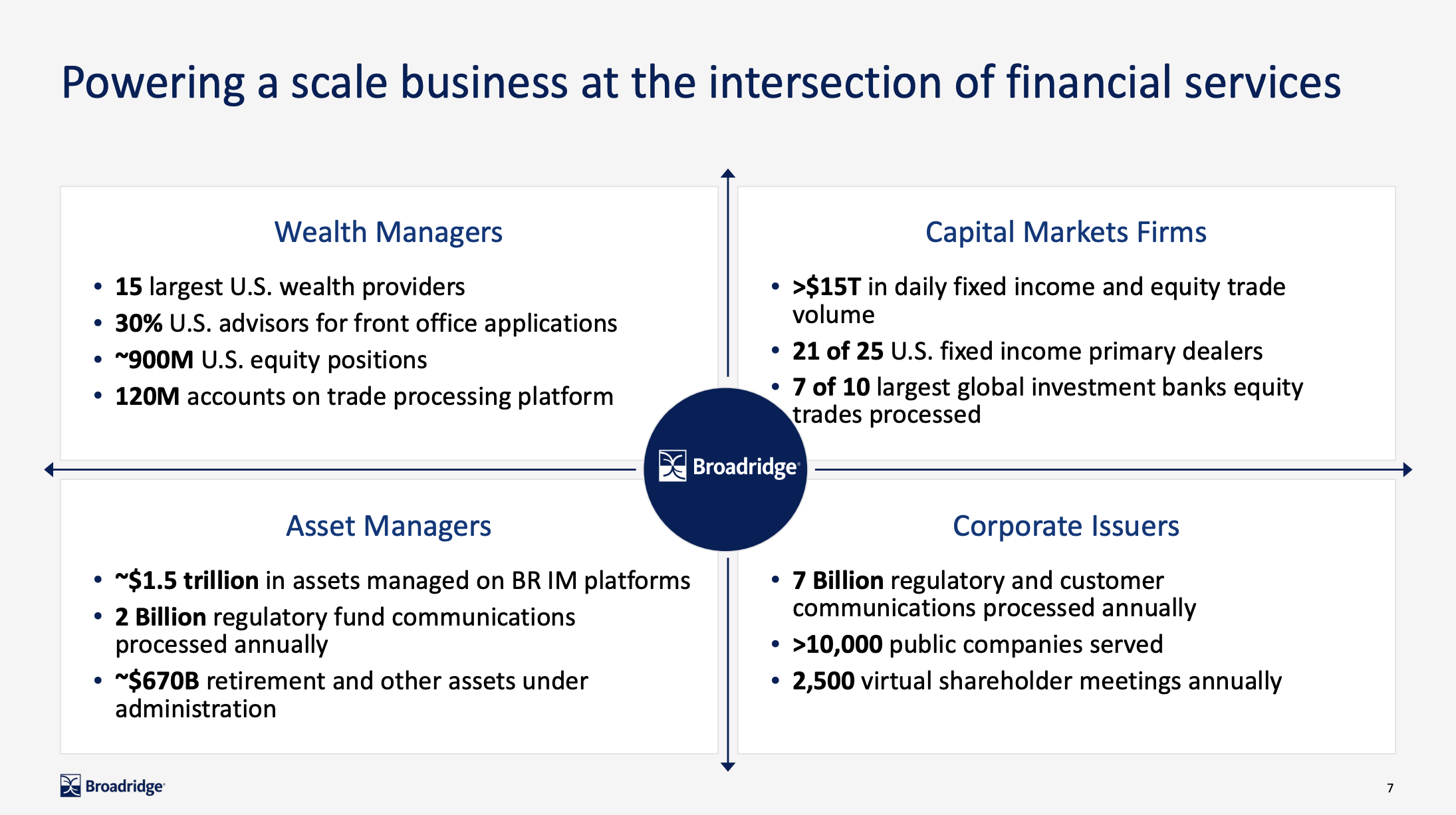
Source: Investor Presentation
What I think is especially interesting about Broadridge is that not only are the services it offers essential and heavily regulated, but they're also incredibly difficult for customers to replace or replicate.
Switching providers — or building out their own infrastructure — would be much more trouble than it's worth, which helps explain why the company consistently retains about 98% of its recurring revenue.
Source: Simply Safe Dividends
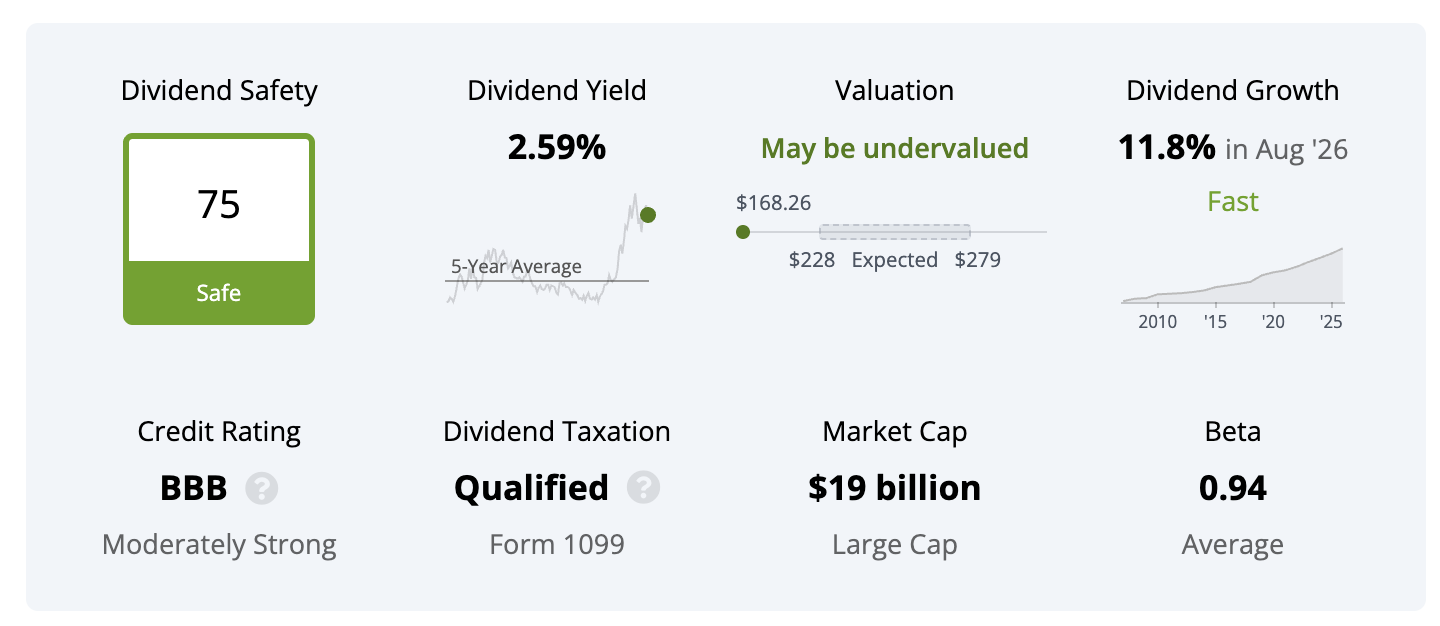
On the dividend side of things, Broadridge has all the makings of a classic dividend growth stock.
The starting yield right now is coming in at 2.6%, and on average, the company has raised its dividend by about 11% annually over the past five years. In total, they've been growing the dividend for 19 consecutive years.
Not to mention, the dividend is very well covered. Both the earnings and free cash flow payout ratios are hovering around 40%, leaving plenty of cash to reinvest back into the business while continuing to pay and grow the dividend.
Plus, Simply Safe Dividends gives the company a Dividend Safety Score of 75, which means that the chances of a dividend cut are pretty low across a full economic cycle.
Source: Simply Safe Dividends
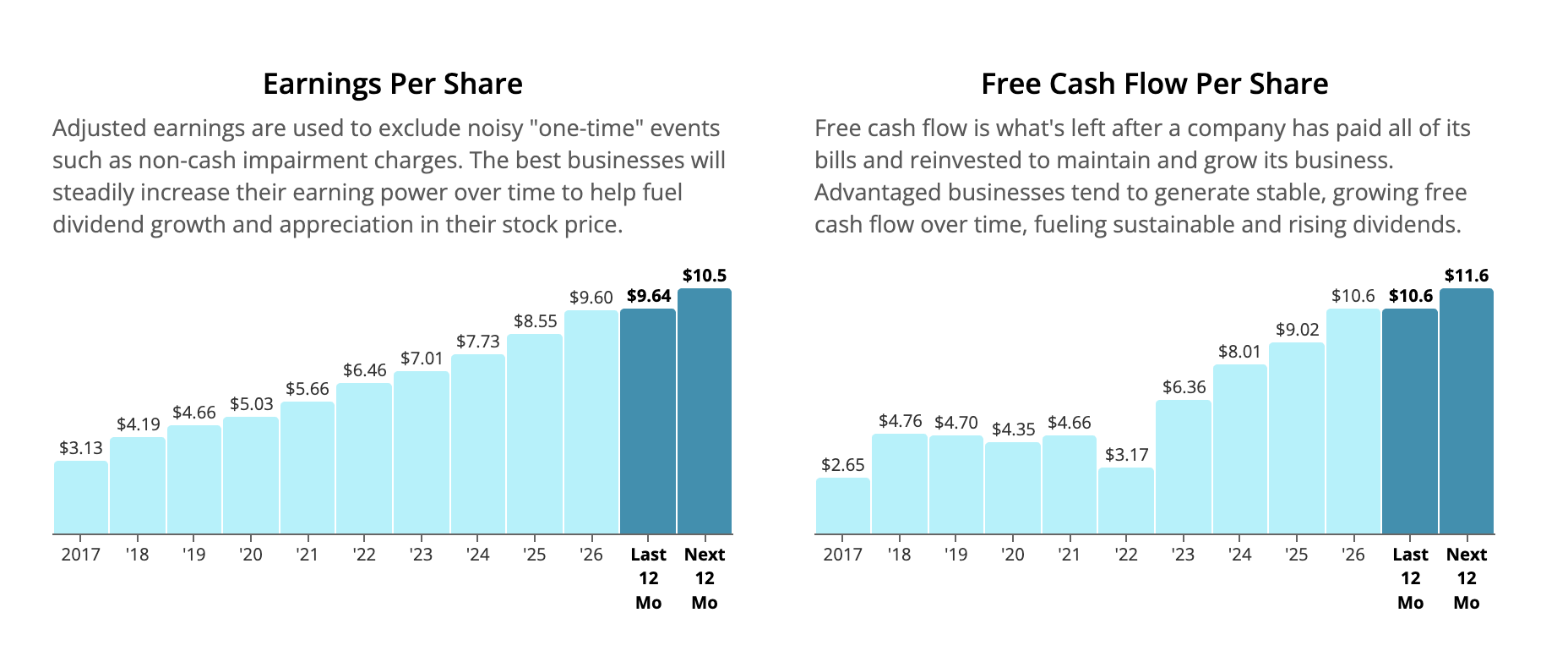
Now obviously, the only way a company can afford to continue growing its dividend — especially at double-digit rates — is if it's fundamentally growing as well. And as you can see from the charts above, Broadridge has no trouble in that department, which I think speaks to the strength of its competitive advantages.
When you provide essential services that your customers rely on and that would be incredibly troublesome for them to replace, you're in a pretty good position to generate consistent, recurring revenue that also brings earnings and free cash flow growth over time.
Overall, I think there's a lot to like about Broadridge, and it has secured a spot on my watchlist. I'm not in the market for any new positions at the moment, as I'm steadily continuing to dollar-cost average into LOW, ROL, and ZTS, but I still don't think now looks like a bad time to be adding shares of BR.
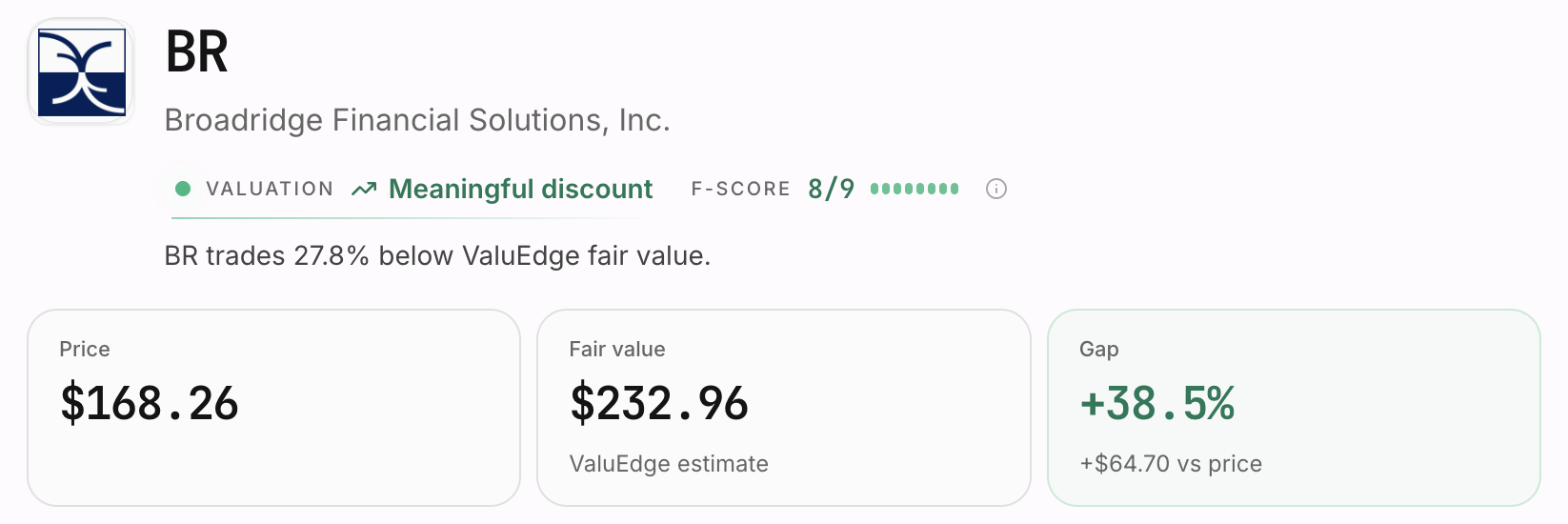
Source: ValuEdge
According to ValuEdge, BR has an estimated fair value of $232.96, which means that the stock is still almost 30% undervalued based on its current share price. You can dive deeper into that here.
With that said, I'd love to hear from you: What are some other under-the-radar stocks that deserve more attention? Write to me here and let me know.
Dividend Investing Democratized
Join thousands of savvy investors in the pursuit of early retirement. Get Retire With Ryne delivered straight to your inbox every week as you build your perpetually growing, cash-flowing dividend stock portfolio.
IN MY PORTFOLIO 📈
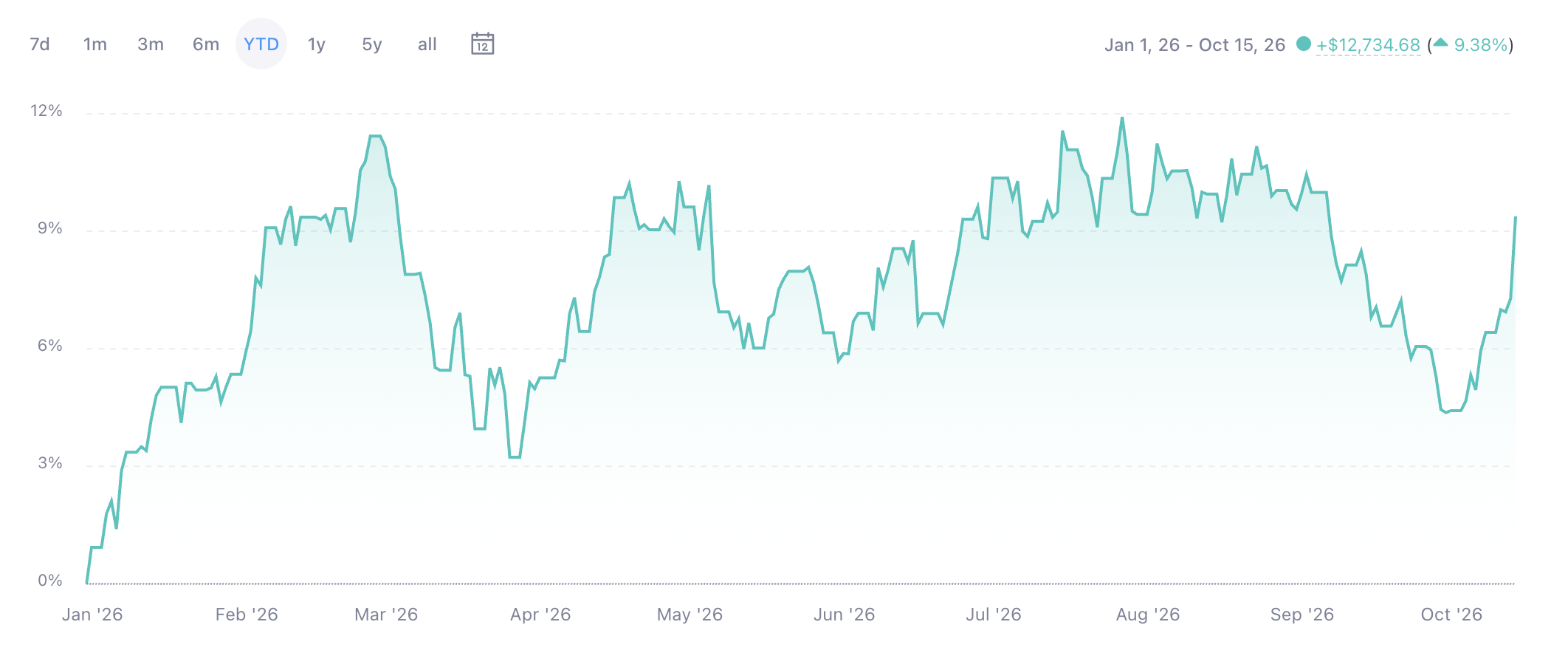
See my full portfolio with all of my holdings, trades, and dividends on Snowball Analytics! Plus, use code "rynewilliams" at checkout to get 10% off your subscription.
ICYMI 🎥
Nike is down almost 80% in the past year. Is this iconic brand a generational buying opportunity or a dangerous yield trap?
CAREFULLY CURATED 🔍
📺 Animal Style Economics - In a world where every business is obsessed with growing as fast as possible, In-N-Out has taken a different approach. Taylor Bell breaks down how this family-owned burger chain has built a cult following (and a multibillion-dollar business) by refusing to compromise on the things that make it great in the first place.
🎧 Millionaires Next Door - Apparently, selling cars, fixing teeth, and manufacturing gutters is incredibly lucrative. In this episode of Talking Billions, two economists uncover the enormous fortunes being built by America's small business owners.
📚 Winning Isn't Everything - Winning the lottery sounds like a dream come true, but what if it actually ended up making you poorer? In this article, Simon Evan-Cook details his revolutionary "Windfall Multiplier" to explain how unchecked spending habits can turn good fortune into an expensive mistake.
SINCE YOU ASKED 💬
"I’m currently investing pretty aggressively for retirement, which should allow me to retire early in about 11 years. But as my kids get older, I’m starting to wonder whether I should be investing less and using that money to create more experiences and memories with them while they’re still young. Have you ever struggled with finding that balance?"
- Chris | Email Submission
This is a fantastic question. My daughter celebrated her first birthday earlier this month, and in thinking about how fast that time has flown by, this exact thing has been very top of mind for me lately.
With that said, I think balancing how much you invest and how much you spend is something a lot of investors struggle with. Too much of a good thing can also be detrimental, and we probably all have a tendency to be financially responsible to a fault.
The fact of the matter is that when you're interested in investing, it's easy to want to put every available dollar toward building your portfolio. In fact, you might even feel guilty when you don't.
I think you can get away with contributing pretty much all of your extra money when you don't have a family to think about, but as your family grows — and as your portfolio grows — that starts to change.
When your portfolio is still in the early stages, I do think there's something to be said for contributing as much as you can to get to the point where compounding can start to move the needle a bit more. It's just not going to happen when your portfolio is only $5,000 or $10,000, so making those sacrifices early on certainly has its place in an investor's journey.
These days, though, now that I have a family of my own and the compounding in my portfolio is starting to become more noticeable, I think it's important to find a better balance. Especially since the larger your portfolio grows, the less impactful your contributions will be.
It's kind of funny to think about actually. In the early stages, your contributions do most of the work in growing your portfolio. But later on, it's the opposite. Your contributions probably won't grow your portfolio as much as the compounding itself. A good problem to have, I think.
Having said that, it's also important to remember that you only have one life to live, and there's more to it than hoarding all of your money to build the biggest portfolio possible.
While your kids are young, I think you should try to spend as much time with them as possible and not let yourself feel guilty about spending money on those experiences, especially if you're already contributing a significant amount of your income toward retirement.
After all, the whole point of investing is to give yourself the freedom to live the life you want. Your portfolio is there to work for you, not the other way around. And I think it's important not to get so caught up in planning for the future that you forget to enjoy the present.
Like I said, it's all about balance, and finding it is something you have to actively work at.
Have a question? Ask me here to see it featured in an upcoming newsletter.
LAST WORD 👋
If you haven’t already, you should check out my FREE Discord group. Think of it as one big group chat with over 3,500 dividend investors who are just as obsessed with this stuff as you are.
It’s a positive, no-drama community where people share their buys, sells, and dividend income, and talk stocks 24/7. Whether you’re just starting out or you’ve been at it for years, you’ll find people ready to answer questions, celebrate wins, and help you grow as an investor.
It’s totally free to join, and I think you’ll get a ton of value out of being part of the community.