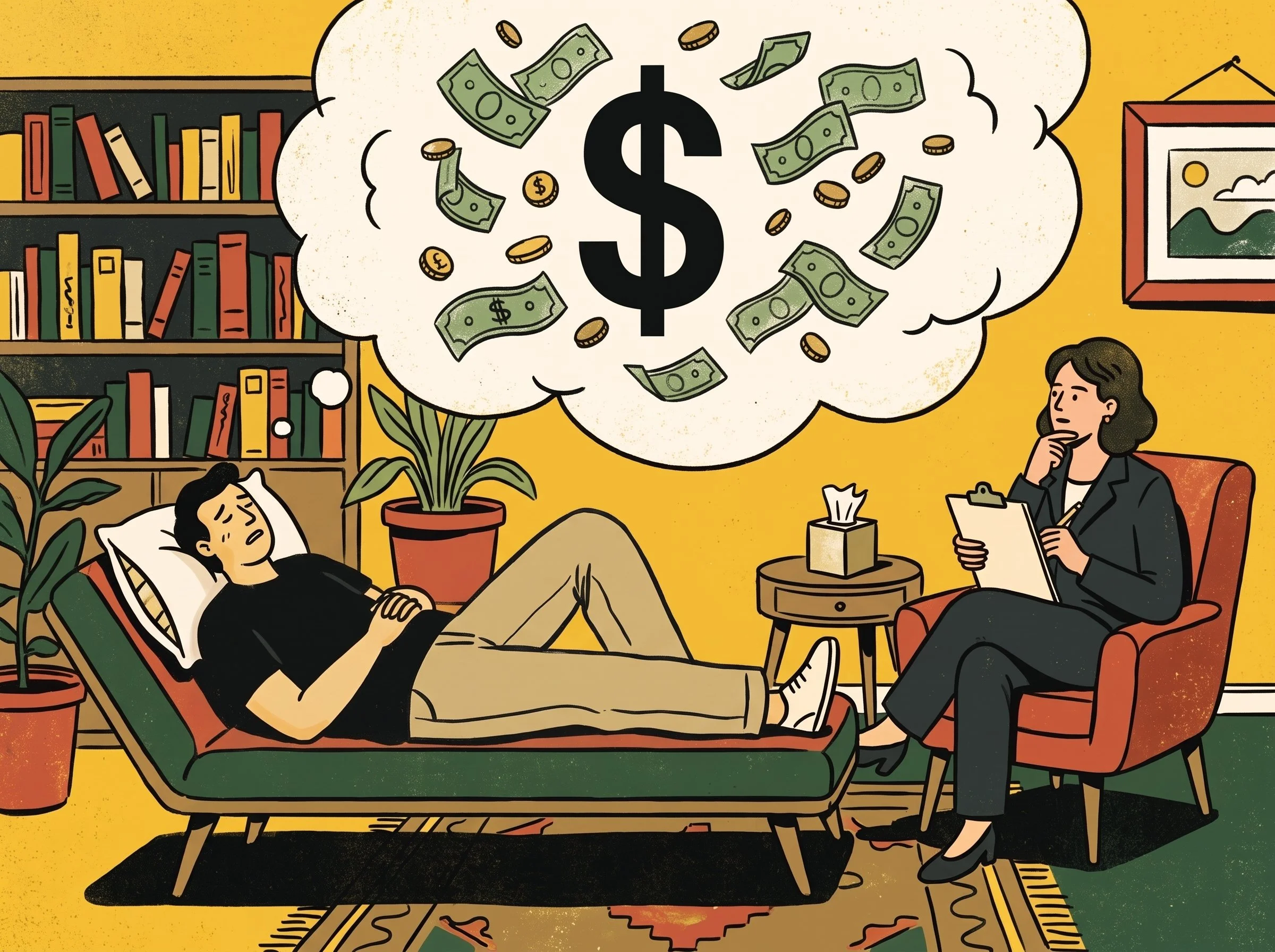
The Strange Psychology of Falling Share Prices
Disclaimer: This page contains some affiliate links that might just lead you to the promised land of awesomeness (or at least some cool products). I may receive commissions for purchases made through links in this post.
As you might know, I’ve been on a mission to read all of Warren Buffett’s letters to Berkshire Hathaway shareholders. They’re all published online (which you can read for free here), and I also publish my notes and key takeaways from each one (which you can also read for free here).
They say you can learn more about business and investing from reading these letters than you would getting an MBA. And while I’ve certainly learned a ton about both, I’ve also discovered something else since starting this project: The investing gods, somehow, have a way of delivering the exact quote I need precisely when I need it.
I just finished reading Warren’s 2011 letter to shareholders, and in it, I came across a quote that perfectly captures what’s been going on in the world of dividend stocks lately and exactly how I’ve been feeling about it. He wrote:
“The logic is simple: If you are going to be a net buyer of stocks in the future, either directly with your own money or indirectly (through your ownership of a company that is repurchasing shares), you are hurt when stocks rise. You benefit when stocks swoon. Emotions, however, too often complicate the matter: Most people, including those who will be net buyers in the future, take comfort in seeing stock prices advance. These shareholders resemble a commuter who rejoices after the price of gas increases, simply because his tank contains a day’s supply.”
Think about it this way: if you were buying a t-shirt, groceries, or gas (we especially feel that one lately), you would obviously be happy to spend less money to buy the exact same thing.
But this is one of the counterintuitive things about investing. When share prices go down, that same rule of thumb doesn’t apply. Instead of being happy that the stocks you own (and would like to own more of) are cheaper to buy, you typically feel upset or concerned.
To some extent, I think that reaction makes sense. When the share price of a stock you own goes down, it feels like you’re literally losing money.
More than that, many investors use the value of their portfolios as a way of measuring progress. When that number goes up, it feels like you’re moving closer to financial freedom. When it goes down, it feels like you’re moving backward.
Like Warren says though, if you’re going to be a net buyer of stocks in the future — which I’d imagine most dividend investors still building their portfolios are — you should actually rejoice when share prices go down, as they have been lately.
At least as it pertains to some of the companies in my portfolio — whether we’re talking about LOW, WSO, O, ROL, or the slew of others whose share prices have been getting hit hard — nothing has fundamentally changed about the underlying businesses. They’re still the same businesses.
And so long as that’s the case, why wouldn’t you want the opportunity to buy them at lower prices? If you’re not planning on selling anytime soon and you intend to continue buying shares and reinvesting dividends for years to come, shouldn’t you want those shares to be as cheap as possible?
A lower share price allows you to buy more shares for the same amount of money while also getting a higher cash flow return on the shares you buy. So long as the underlying business remains healthy, there is a lot of good that comes from being able to buy it at a lower price.
Still, knowing that logically doesn’t necessarily make it any easier emotionally. When a stock drops below the price you paid for it, it’s hard not to feel like you made a bad decision buying when you did.
Loss aversion tells us that the pain of an unrealized loss hurts about twice as much as the same percentage gain would feel good. But you have to overcome that.
This speaks to one of the most difficult parts about investing, which is overcoming yourself and your innate human quirks. In your head, you might know that lower share prices are beneficial to you as a chronic buyer, but in your stomach, you feel the opposite.
If you can learn to look beyond what the share price is doing today and instead focus on the opportunity that lower prices are offering you for the benefit of the future, then hopefully you can learn to find the bright side in the downside. For dividend investors, there always is one.
Having said all of that, now I want to hear from you: Which buying opportunities are you taking advantage of in your portfolio right now? Write to me here and let me know.
Dividend Investing Democratized
Join thousands of savvy investors in the pursuit of early retirement. Get Retire With Ryne delivered straight to your inbox every week as you build your perpetually growing, cash-flowing dividend stock portfolio.
IN MY PORTFOLIO 📈
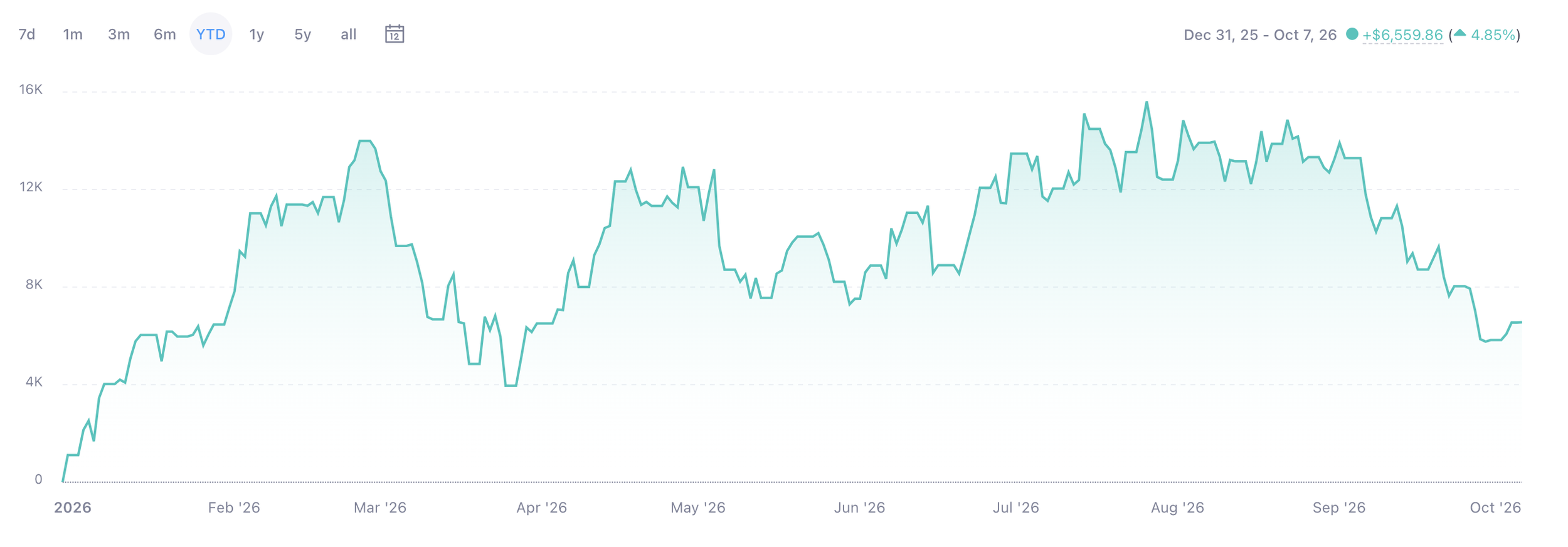
See my full portfolio with all of my holdings, trades, and dividends on Snowball Analytics! Plus, use code "rynewilliams" at checkout to get 10% off your subscription.
ICYMI 🎥
September was a record month for dividend income in my portfolio, with over $500 coming in. In this video, I’m breaking down all of my payments, including a whopper of a payment from SCHD.
CAREFULLY CURATED 🔍
📺 Bad Bet? - VICI Properties is down bad and yielding more than 7%, which usually means the market smells trouble. This video from Compounding Dividends gets into whether investors should be getting worried or excited about it.
🎧 You Can't Fight Gravity - Governments can bend the rules, but they can’t break the laws of economics. Howard Marks explains why attempts to suppress long-term interest rates are likely to end bad.
📚 Gone West - I’ve never been a big fan of Westerns, but Lonesome Dove has definitely converted me. It’s funny, full of adventure, and filled with characters you'll wish you could spend more time with. I highly recommend reading this in-between investing books.
SINCE YOU ASKED 💬
"How often does a dividend have to be cut or paused by factors outside of a companies control for you to decide to sell, oppose to poor management?"
- AussieFlamingoFIRE | YouTube
I’ve been on the receiving end of a few dividend cuts since I started investing, and I know that some investors have a very straightforward rule of thumb for this: If a company cuts its dividend, they sell the stock no matter what.
When I first started investing, I actually subscribed to that way of thinking. But as I’ve gained more of my own experience in the market, my approach has changed quite a bit. Now, I really think it depends on the circumstances and the context behind the dividend cut.
One example where I didn’t sell after a dividend cut was W. P. Carey (WPC). A couple of years ago, the company spun off its office portfolio into a separate company. And after getting rid of those properties, W. P. Carey was obviously a smaller business generating less rental revenue, so the dividend had to be adjusted accordingly.
I didn’t really consider that a structural or foundational weakness with the company. The business itself was smaller, so the dividend had to be smaller too.
Outside of that one occurrence, W. P. Carey has been a very solid and consistent dividend payer. I still think it’s a great real estate investment trust, and I’m happy to hold onto it.
With that said, if W. P. Carey (or any other company in a similar situation) started making a habit of cutting its dividend, that would be a different story. At that point, we’re no longer talking about a one-off event. Cutting the dividend would be a pattern, and that’s a problem.
At the end of the day, I want to invest in companies that have the ability to increase my income over time, not reduce it. If a company consistently makes a habit of cutting its dividend and reducing my income, regardless of the reason, that goes against why I invested in the company in the first place.
Things happen, though, and one-off events occur. If you’re an investor long enough, you’re bound to experience a dividend cut at least once. And in at least one case where I’ve held onto a stock after a dividend cut, the company has eventually been able to grow the dividend back to where it was before, if not higher.
All in all, there isn’t a specific number of dividend cuts where I automatically decide to sell. I’m much more interested in the context behind those cuts and whether they reflect a deeper underlying problem with the business.
I can live with a one-off cut if the underlying business is still solid. But if those cuts start becoming a pattern, then something probably isn’t right. And that’s when I’d seriously question whether I want to own the company anymore.
Have a question? Ask me here to see it featured in an upcoming newsletter.
LAST WORD 👋
I love hearing from you all, and I'm always looking for feedback. How am I doing with the newsletter? Is there anything you'd like to see more or less of? Which aspects of the newsletter do you enjoy the most?
Your insights on these matters are essential in making this newsletter the best it can be. If you want to help, take a moment to share your thoughts by completing this quick form. It'll take you less than 60 seconds - guaranteed.
Thanks in advance!