How to Build a Better Investing Ecosystem
Disclaimer: This page contains some affiliate links that might just lead you to the promised land of awesomeness (or at least some cool products). I may receive commissions for purchases made through links in this post.
When I first started investing, I was a sponge trying to soak up as much as I could. I was especially eager to learn since I had no experience or knowledge whatsoever coming into this.
Pretty much all of my free time in those early days went toward watching YouTube videos and financial news, listening to earnings calls and podcasts, reading articles, investor presentations, analyst reports, and investing/personal finance books…really anything I could get my hands on that could help me learn more about this new obsession of mine.
The time spent consuming all of those things was essential in my earliest investing years. Being that sponge helped lay the foundation for my investing knowledge and took me from someone who knew absolutely nothing about investing to someone who knew, at least, a little bit.
One thing I learned is that somewhere along the way — after watching enough videos, reading enough articles and analyst reports, and getting your own, actual hands-on experience as an investor — there is a shift that occurs. At least, it did for me.
At some point, you go from being that sponge, trying to soak up anything and everything you can, to realizing that there’s just too much coming at you. Instead of trying to absorb it all, you reach a place where you need to start controlling the flow.
There are only so many videos you can watch, analyst notes you can read, and mornings you can spend listening to Squawk Box before it all starts to become noise. And the more noise there is, the more difficult it becomes to actually think.
After you gain some experience, you’ll come to find that the constant flow of information can actually start to distort and disrupt your own thinking. And one thing you eventually learn as an investor is that thinking for yourself is paramount, and in too short supply these days.
Plus, in a day and age where it’s easier than ever to publish content, we’re now bombarded with an ever-increasing flood of it, which is why I think you need to be even more protective of what you allow into your airspace.
This is where building your investing ecosystem becomes incredibly important. Your investing ecosystem is essentially the environment you create around yourself that helps you become the kind of investor you’re trying to be. And naturally, as you evolve as an investor, so should your ecosystem.
In my case, my ecosystem went from “anything about investing, everywhere, all the time” to something much more intentional.
For one, I consume far less investing content than I used to. I watch fewer videos, read fewer analyst articles, and pay less attention to whatever the financial news of the day happens to be.
Instead, I try to spend more of my time going straight to the source. If I’m researching a company, I’d rather spend my time actually looking through its financials, listening to earnings calls, reading investor presentations, or listening to interviews with the management team than immediately seeking out what someone else thinks about the company.
And don’t get me wrong, that doesn’t mean other people’s opinions aren’t valuable. They absolutely can be, especially when they oppose your own.
But I think there’s something to be said for developing your own initial thoughts on things before finding out everyone else’s. Otherwise, it becomes incredibly easy to start with someone else’s conclusion and look at everything else through that lens.
Now that I have at least a decent sense of what I’m looking for in an investment, I’d rather start with the source material, develop my own thoughts, and then check out other opinions afterward. At that point, those opinions can help me stress-test my own thinking rather than form it for me.
With that said, developing your investing ecosystem is about more than just being selective with the investing content you consume. It’s also about making sure you’re not constantly consuming in general.
One of the great ironies of investing — and something that makes it different from many other pursuits — is that doing more doesn’t necessarily make you better at it. As the saying goes, your portfolio is like a bar of soap: the more you mess with it, the smaller it gets.
You’ll inherently be more tempted to mess with your portfolio if you’re constantly involved in the market and its goings-on. This is why, for me, having other hobbies and interests not related to my portfolio has become an incredibly important part of my investing ecosystem.
For example, when I’m running, I’m not worried about what my share prices are doing. I’m just focused on running.
When I’m reading, same thing. I’m not paying attention to whatever the fleeting news of the day happens to be. I’m in a whole different world.
Those things might not seem like they have anything to do with investing, but I actually think they help me become a better investor because they give me some distance from my portfolio and the space to think through things.
The fact of the matter is that as someone who publishes a lot of content around investing, has done so for years, and plans to continue doing so, I’m incentivized to try and convince you to consume more content.
But the truth is, you probably don’t need more. You might actually be better off with less.
Less doesn’t mean none, of course. If you’re managing your own portfolio, you need to know what’s going on with the businesses you own. You should continue learning and consuming things that can make you a better investor (hopefully this newsletter checks that box).
But I think there’s a big difference between doing those things and consuming content just because you feel like you need to have a pulse on everything that’s going on. You really don’t.
Overall, when I’m spending time with my investments, I want to get as close to the source as possible. And when I’m not, I want to actually be able to detach.
I think a good investing ecosystem should help you do both. And with that said, now I want to hear from you: What have you added (or removed) from your ecosystem over the years that has made you a better investor? Write to me here and let me know.
Dividend Investing Democratized
Join thousands of savvy investors in the pursuit of early retirement. Get Retire With Ryne delivered straight to your inbox every week as you build your perpetually growing, cash-flowing dividend stock portfolio.
IN MY PORTFOLIO 📈
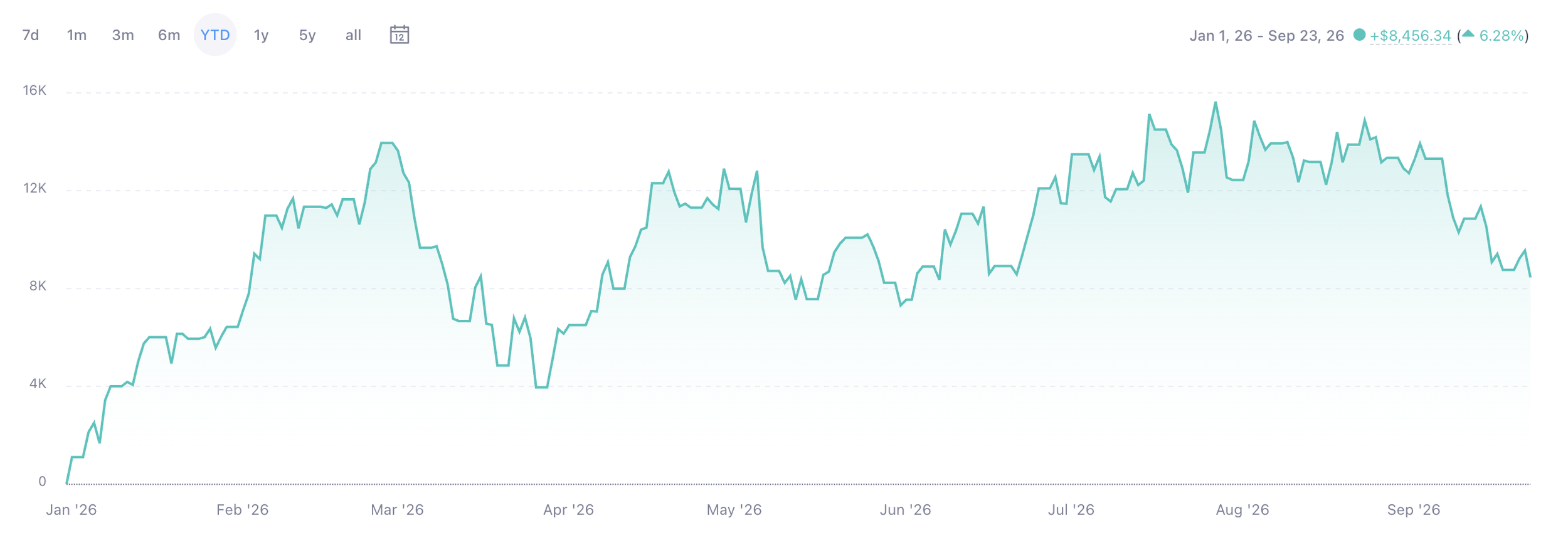
See my full portfolio with all of my holdings, trades, and dividends on Snowball Analytics! Plus, use code "rynewilliams" at checkout to get 10% off your subscription.
ICYMI 🎥
Forever is a long time, but I have a strong feeling that these three stocks can stand the test of time.
CAREFULLY CURATED 🔍
📺 Big O Energy - Many investors believed Realty Income got too big for its own good. Now, Jussi Askola thinks the company may have found a way to make being absolutely massive a big advantage.
🎧 Turnaround Time - Everyone loves a comeback story until their money is on the line. The Dividend Talk guys dive into what separates a genuine turnaround from a stock that might just be cheap for a good reason.
📚 AI’s 2008? - Everyone is watching how fast AI is growing, but this article from Groundbreaker argues we should be watching whether or not that growth is accelerating, and draws a pretty wild parallel to the events behind 2008.
SINCE YOU ASKED 💬
"What are your thoughts on the NEOS covered call ETFs like QQQI and SPYI?"
- Darian | YouTube
This is a really great question! I think for what they are, both of these funds have been fantastic so far.
I would imagine that someone buying SPYI, QQQI, or really any covered call ETF like these is doing so mainly because they want to generate consistent income. And at least so far, these funds have delivered exactly that.
Since their inceptions, the income they’ve paid out each month has been pretty stable. In fact, the distributions have actually grown a little bit each year, so they’re off to a great start in that department.
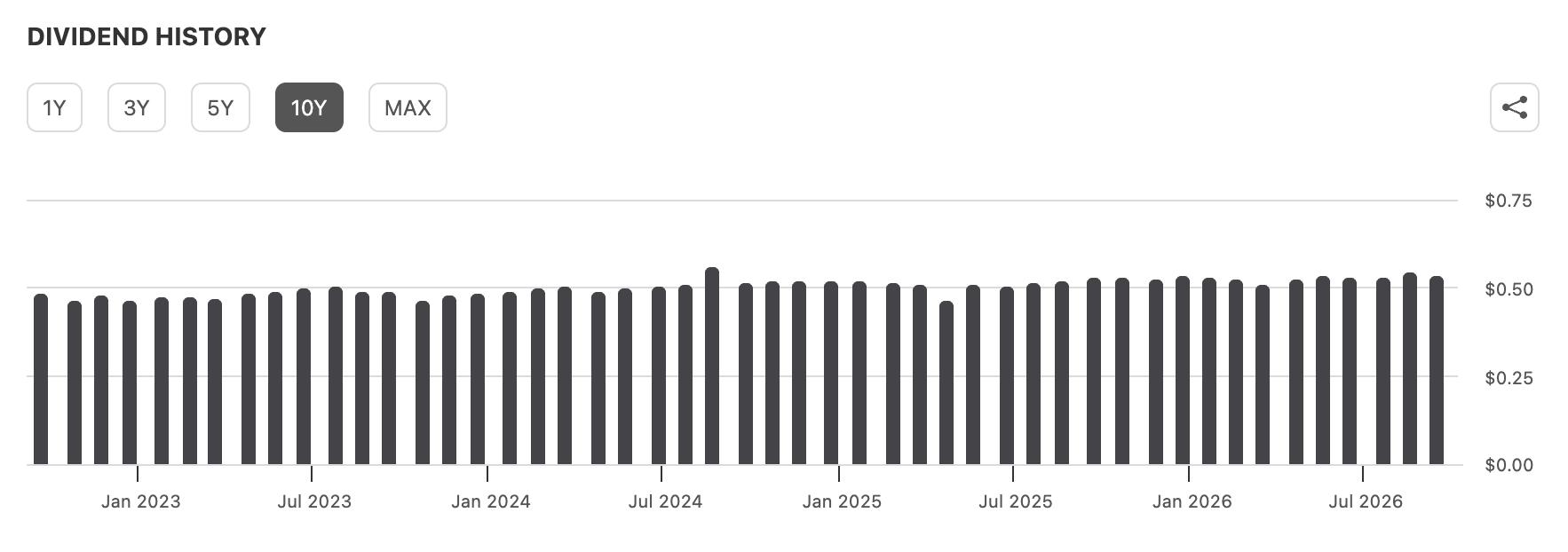
SPYI Income History | Seeking Alpha
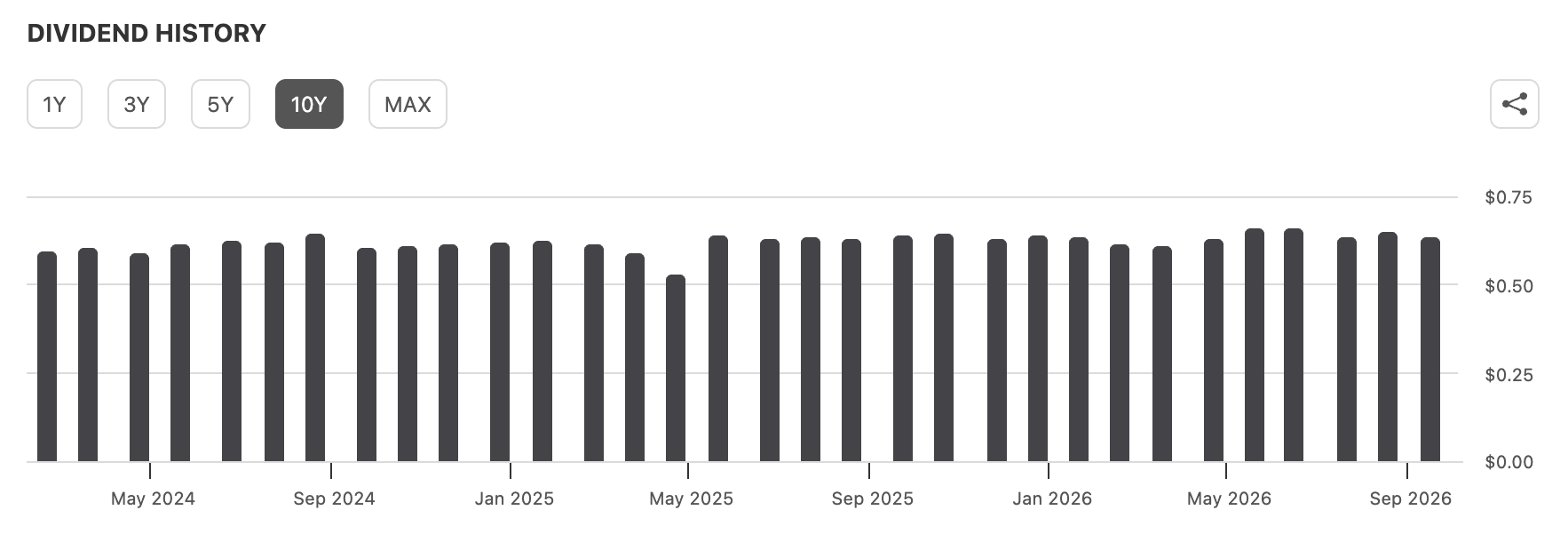
QQQI Income History | Seeking Alpha
On the other side of that, though, it is important to point out that both funds have underperformed the indexes they track. SPYI writes covered calls on the S&P 500, while QQQI writes covered calls on the Nasdaq 100, and both indexes have outperformed their covered call counterparts on a total return basis.
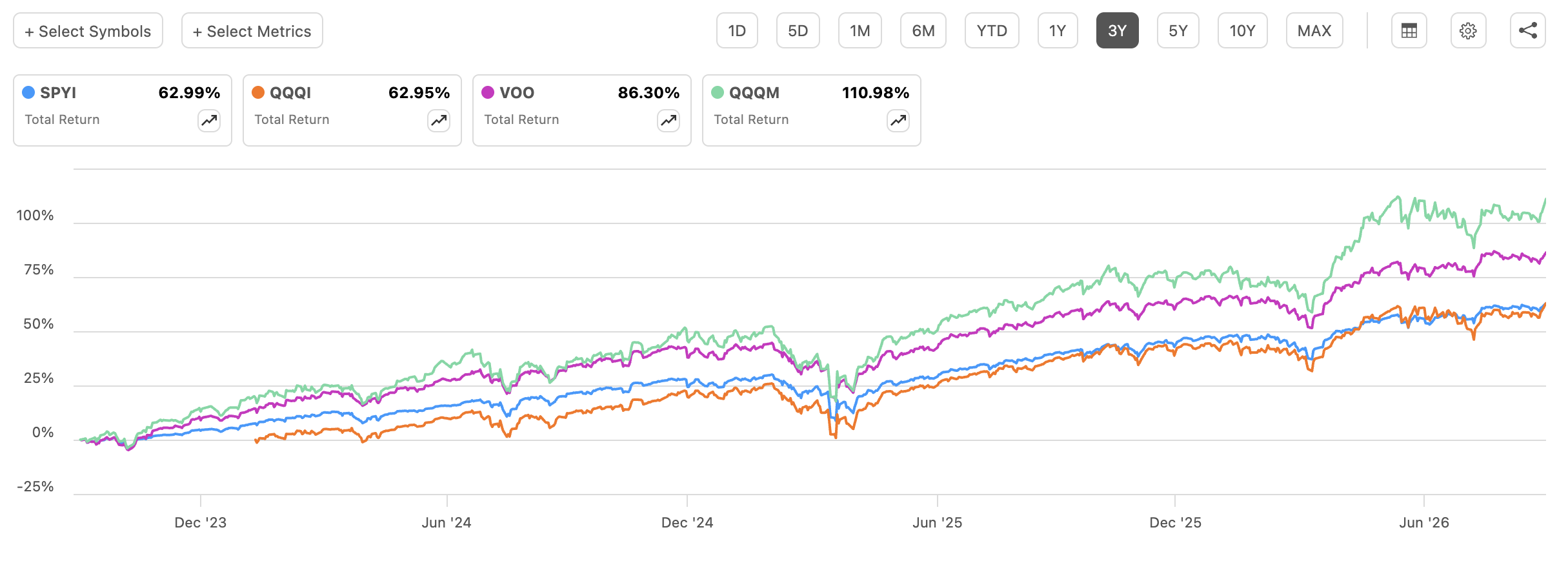
Source: Seeking Alpha
Having said that, I also don’t think that necessarily means these funds don’t have a place in one's portfolio.
I would imagine that someone investing in SPYI or QQQI likely isn’t as concerned about maximizing total returns, and is more concerned with generating consistent income that they can actually use to pay their bills. If that’s the goal, trailing the underlying index on a total return basis might not be that big of a deal.
There is still one big question mark for me though. Both of these funds have only been around during a period when the market has performed well.
Because of that, I’ll be very interested to see how they perform (and more importantly, how their distributions hold up) during an extended downturn. We really won’t know until we actually go through one.
And if I were someone looking for consistent and stable income for the long term, that would probably be the biggest thing that gives me pause about putting a significant portion of my portfolio into these types of funds. Like I said, the income has been consistent so far, but we just don't know if that will continue if the market takes a turn for the worse.
So overall, I think SPYI and QQQI have been great at doing what they’re supposed to do. I just think we need to see what they do over a full economic cycle before we can truly know how dependable that income actually is.
Have a question? Ask me here to see it featured in an upcoming newsletter.