Disclaimer: This page contains some affiliate links that might just lead you to the promised land of awesomeness (or at least some cool products). I may receive commissions for purchases made through links in this post.
Reaching financial freedom takes a long time. There’s no doubt about that.
I think this is one of the reasons why so many people either don’t invest or don’t start investing as early as they should. When the finish line is likely decades away, it can feel like an incredibly long uphill climb to get there, which discourages people from even trying.
But one of the great things about investing is that even though it does take a long time (anything worthwhile usually does), you’re met with plenty of small victories along the way that serve as evidence that you’re making progress.
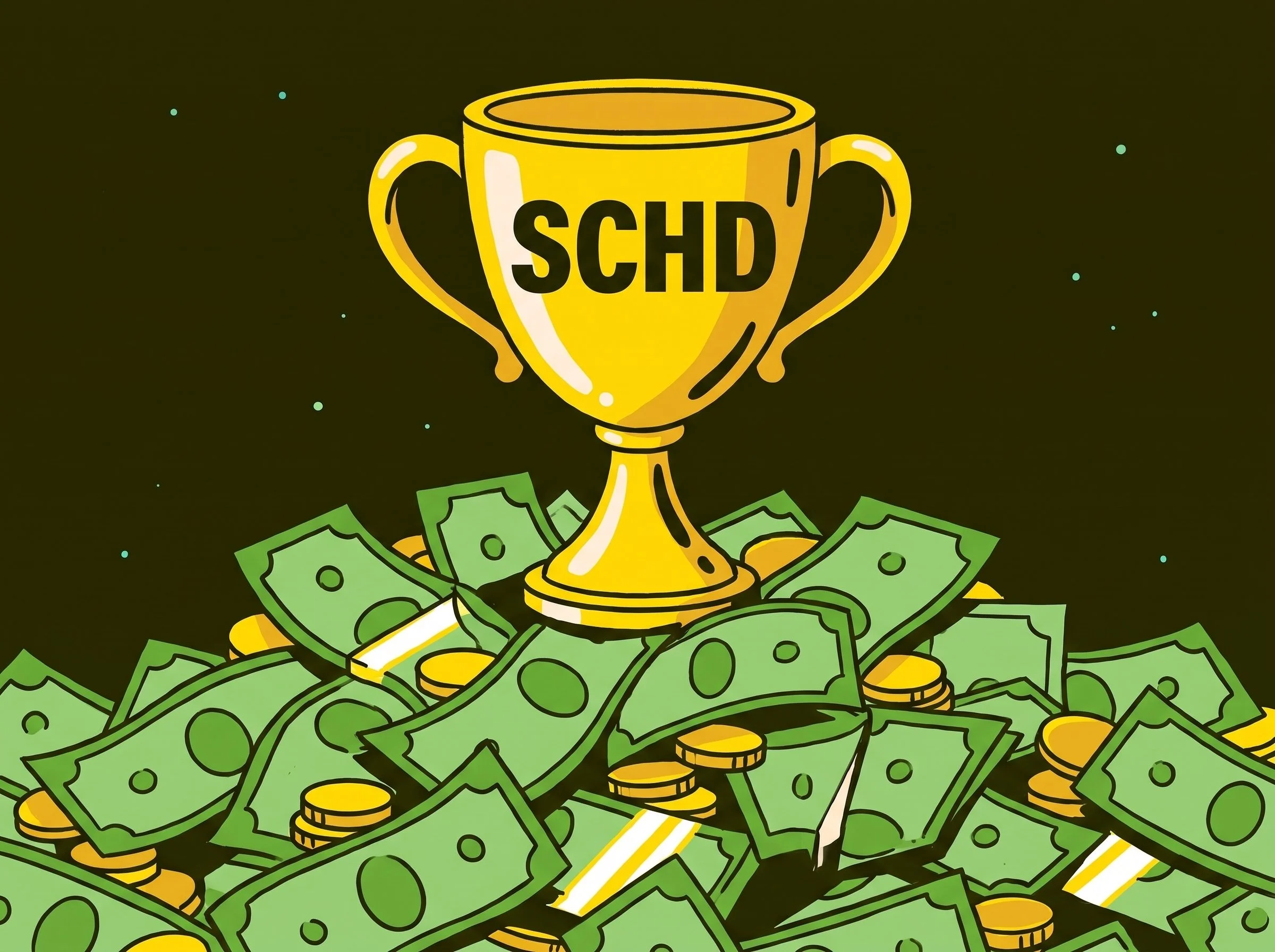
On the path to financial freedom, these small victories are the checkpoints. I think they’re all worth celebrating, and I just hit a pretty big one in my portfolio with my SCHD position.
For some context, one of my goals coming into this year was to reach 600 shares of SCHD by the end of 2026. Somewhere along the way, though, I revised that goal upward to 650 shares because, after doing the math, I realized I would probably have no problem hitting that initial goal of 600.
As it turns out, I was right…for once.
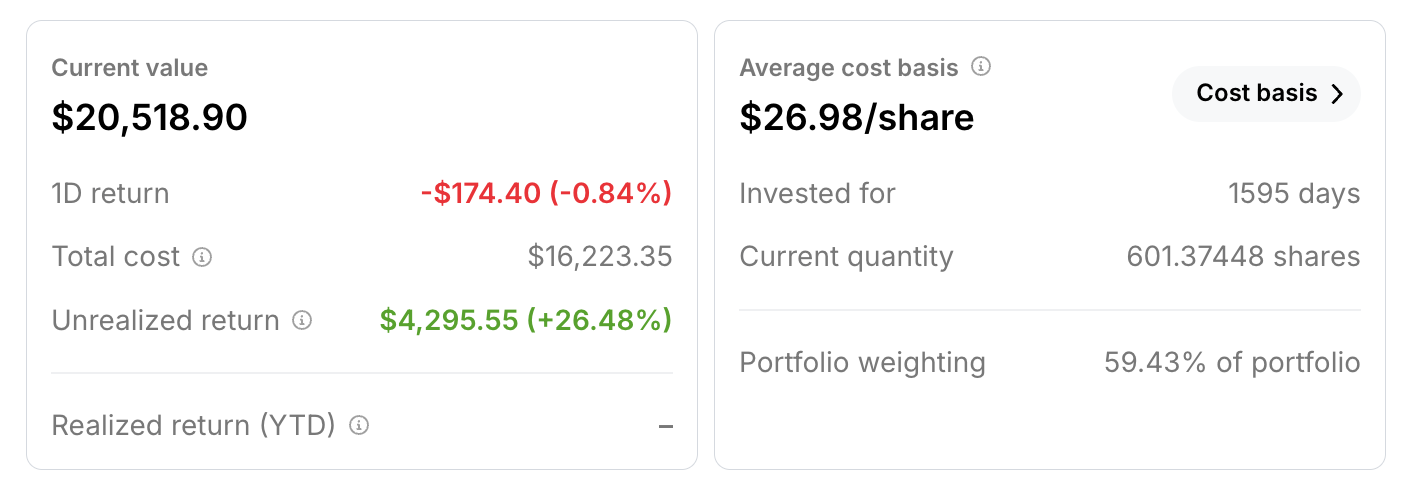
With this week’s contribution to my Roth IRA and my weekly dollar-cost average into SCHD, I’ve officially surpassed the 600-share mark. And even though 600 shares is no longer my BIG goal for the year, it’s still a pretty big milestone for me.
Source: Public
What makes this particular small victory especially satisfying is how boring the process of getting here has been. I’ve been actively building this position — diligently dollar-cost averaging into it — every single week for almost five years now.
I started buying SCHD every week at the beginning of 2022 when I opened my Roth IRA. And since then, week after week, I’ve just continued throwing more money into the fund.
Throughout that time, there was never one massive investment that suddenly got me to 600 shares. I don’t think I’ve ever thrown a big lump sum into the fund. Getting to this point is really just the result of doing the same boring but effective thing over and over again for almost half a decade.
During the years when SCHD’s share price was on the down and out and people were dogging on it, calling it “dead money,” I kept buying. And even now, with the share price up 25% YTD and sitting at an all-time high, I’m still buying.
Through all of it, my M.O. has been to just keep stacking up my number of shares and the income they pay me. And little by little, those weekly investments have added up to the position I have now.
Which begs the question: With just over 600 shares, how much does SCHD actually pay you?
Well, if we base it on last quarter’s dividend of $0.2525 per share, my 601 shares would generate $151.75 per quarter, or $607 per year.
The thing about SCHD’s dividend payments, though — or really any ETF — is that the quarterly payments tend to fluctuate. They go up and down every quarter depending on the makeup of the fund at that point in time.

Source: Charles Schwab
Q1’s payment this year was $0.2569 per share, while Q2’s was $0.2525. And the Q3 dividend should actually be announced here in the next couple of weeks, with the payment being sent to shareholders at the end of the month.
My friend Craig, AKA SCHD Stan, who is probably one of the most trusted resources on the fund, does a deep dive into SCHD’s expected income every quarter. Right now, he estimates that Q3’s payment should come out to around $0.2840 per share.
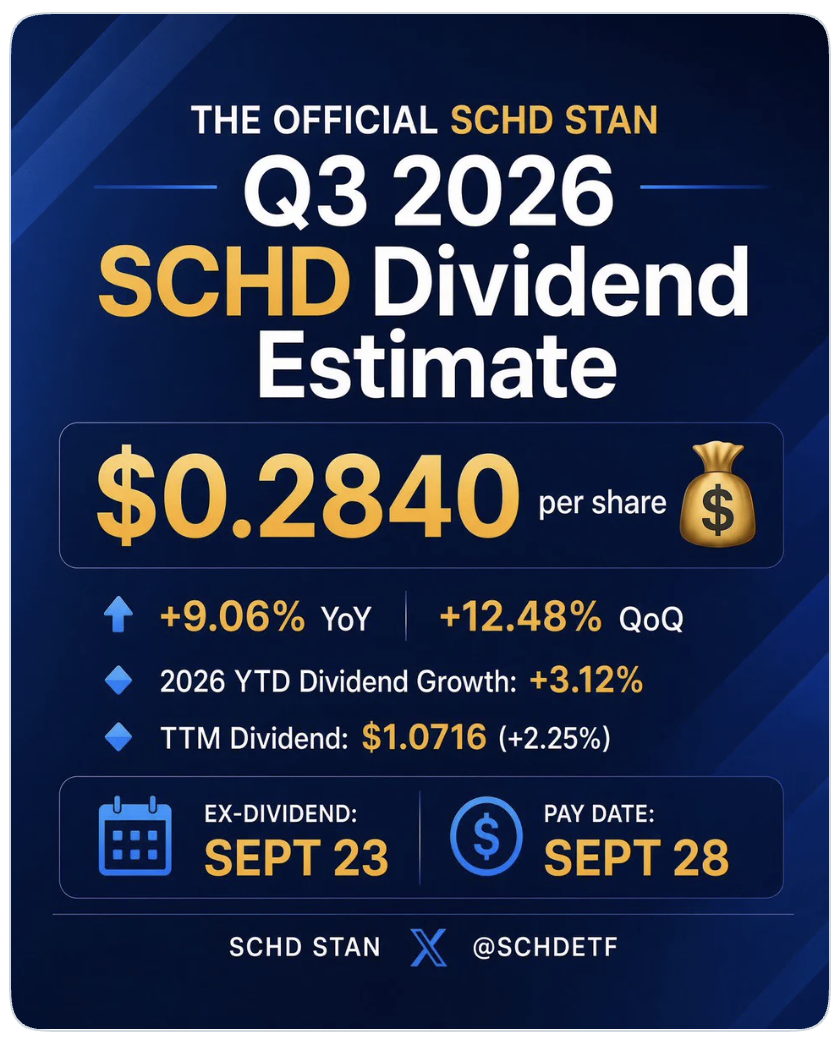
Source: SCHD Stan
Now obviously, that’s just an estimate and is subject to change. But if he’s right, based on my current 601 shares, I should receive $170.68 in dividends here in Q3.
Fortunately, SCHD’s ex-dividend date isn’t until September 23rd, so there’s still some time to swoop up a few more shares before the cutoff. And as for my new goal of reaching 650 shares by the end of the year, we’ll see what happens.
As I’m writing this, there are 16 full weeks left in 2026. And based on SCHD’s current share price of almost $35, I’m able to pick up right around two shares every week through my weekly dollar-cost averaging ($72 per week going to SCHD).
Assuming the share price doesn’t change all that much, that should allow me to add at least another 32 shares to my position by the end of the year.
But then we also have to account for the shares added through reinvested dividends. If Craig’s Q3 estimate is right, that roughly $170.68 dividend (which, again, is only based on my current share count) would buy me another 4.9 shares at today’s price. Add that to the 32 shares from my weekly contributions, and we’re already at almost 37 additional shares.
Then, hopefully, my Q4 dividend will allow me to pick up at least another five shares, which would put me somewhere around 42 additional shares by the end of the year. So it’ll be close.
I may not officially reach 650 shares by the end of the year, but we’ll see what happens. Either way, I’m proud of how much this position has grown.
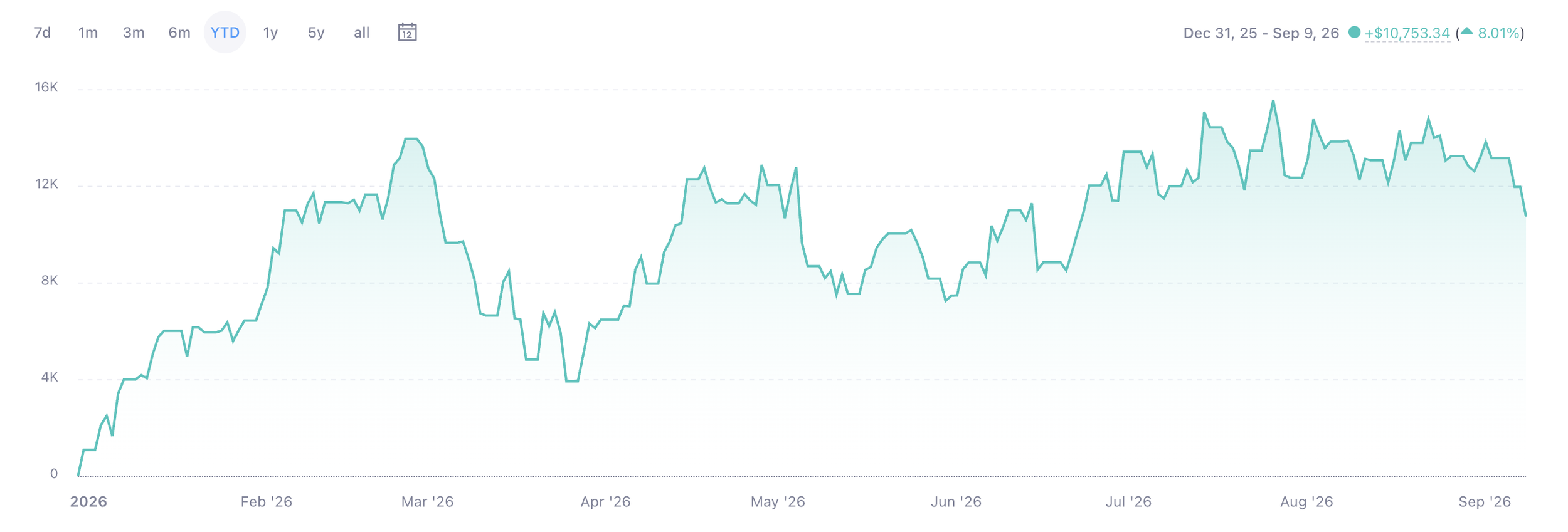
Without having to think about it much at all, I’ve been able to steadily invest more than $20,000 into this one fund over the past handful of years, and those shares are now generating more than $600 in passive income every single year (and growing).
And really, that’s why I think these small victories are worth celebrating. I’m obviously not going to retire off of 600 shares of SCHD, but when the financial freedom finish line is still at least a decade away, it can be easy to lose sight of how much progress you’re making along the way.
If you want an example of what this kind of consistency can eventually build, Craig, who I mentioned earlier, just crossed 9,000 shares of SCHD. Obviously, I’ve still got a long way to go to get to his level, but it’s pretty cool to see what years of consistently doing the same boring thing can eventually turn into.
For now, though, I’m pretty happy with 600 shares. To me, it’s another sign that what I’m doing is working and that I’m on the right path. I think we all need that reminder every now and again.
With that said, now I want to hear from you: What was the most recent small victory you celebrated in your portfolio? Write to me here and let me know.
Dividend Investing Democratized
Join thousands of savvy investors in the pursuit of early retirement. Get Retire With Ryne delivered straight to your inbox every week as you build your perpetually growing, cash-flowing dividend stock portfolio.
IN MY PORTFOLIO 📈
See my full portfolio with all of my holdings, trades, and dividends on Snowball Analytics! Plus, use code "rynewilliams" at checkout to get 10% off your subscription.
ICYMI 🎥
These five dividend stocks just raised dividends big time, with one shelling out a near 30% increase. Wow!
CAREFULLY CURATED 🔍
📺 Wait For Watermelons - In this recent interview on the New Money channel, Mohnish Pabrai riffs on investing in the “no-brainers,” aggressively using the too-hard pile, and waiting patiently until a fat pitch comes right down the middle.
🎧 Profit From Profit - David Bahnsen makes the case for a radical investing idea: owning profitable businesses and having them send some of those profits your way.
📚 Happy Accident? - Daniel Peris explains how a century-old tax policy accidentally turned corporate America into a debt-obsessed machine, and why it might be time to rethink the whole thing.
SINCE YOU ASKED 💬
"What do you think about investing in growth stocks first then selling all of it and buying dividend stocks with the profit?"
- Bryan | YouTube
I think that’s a perfectly fine way to go if that’s your preference.
If you just invest in something like VOO or VTI (as very basic examples), let it grow for a number of years, and then eventually convert that into a higher-yielding portfolio when you’re ready to start living off the dividends, I don’t think there’s anything wrong with that in theory.
In practice, though, the success of that plan depends quite a bit on when you make the transition.
If you sell your “growth” investments right at the very top of the market, then great. But if you happen to make the transition in the middle of a major pullback, that may not be so ideal.
And either way, hindsight can mess with you in a big way. If you sell when the market is booming and it keeps going up, you’ll probably wish you had waited. If you sell during a pullback, you’ll probably wish you had done it sooner.
All of that is to say that this strategy relies at least somewhat on timing the market. That can certainly work out, but none of us knows what the market is going to look like when the time comes to make that transition.
This is one of the reasons why I personally choose to invest in a way that doesn’t require me to make such a transition. Timing the market is just one less thing I have to worry about getting right when planning for financial freedom.
With that said, I also think it’s important to remember that “growth” and “dividends” aren’t mutually exclusive, and they certainly aren’t opposites in the way people often make them out to be.
There are plenty of great dividend-paying companies that are also very growthy. Just look at stocks like ABBV, CVX, EPD, MAIN, and WSM, which have all outperformed the S&P 500 on a total-return basis over the past five years.
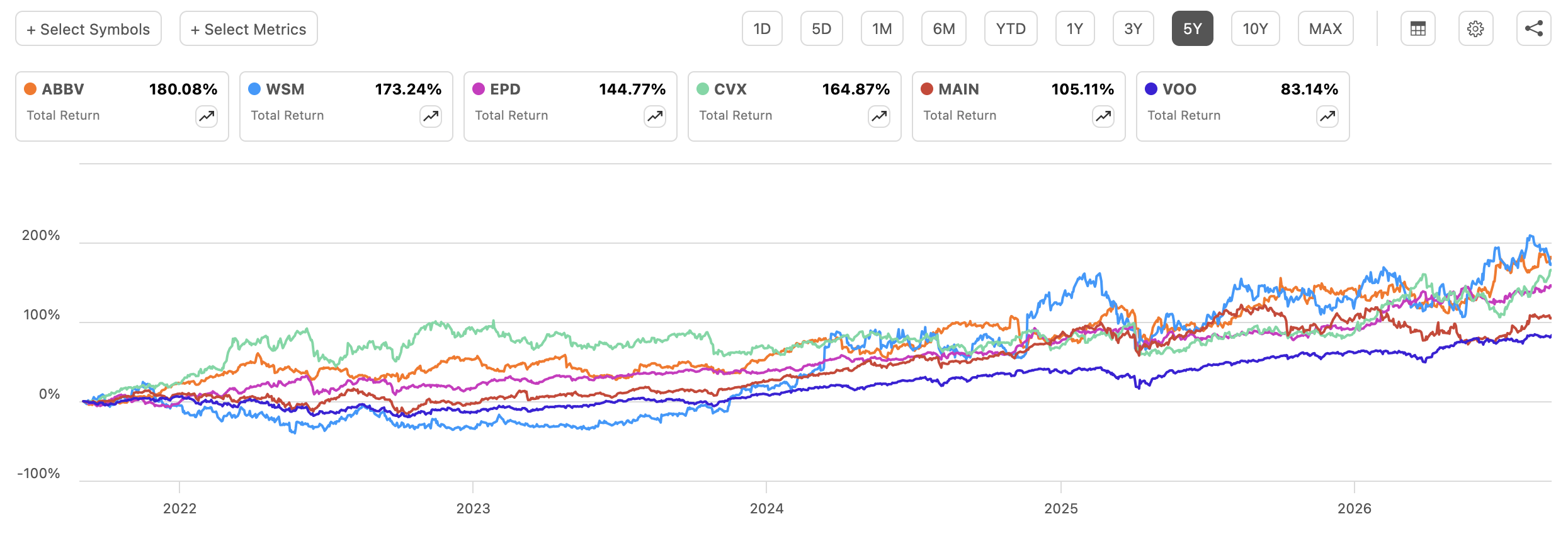
Source: Seeking Alpha
There are plenty of other examples out there too. Those are just a few I pulled from my own portfolio.
The point is, it doesn’t necessarily have to be one or the other. Investing isn’t that black and white, and the great thing about it is that you can have your cake and eat it too.
In other words, you can invest in dividend-paying companies that also have the ability to appreciate over time. In fact, I think those are the best kinds, and they’re exactly what I personally try to look for in my portfolio.
Have a question? Ask me here to see it featured in an upcoming newsletter.