My Top Dividend Stock To Buy In September
Disclaimer: This page contains some affiliate links that might just lead you to the promised land of awesomeness (or at least some cool products). I may receive commissions for purchases made through links in this post.
As earnings season begins to wind down, some of this quarter’s biggest casualties have become clear.
Walmart (WMT) reported its slowest same-store sales growth in almost six years. La-Z-Boy (LZB) saw its share price plunge nearly 20% after reporting earnings. And perhaps most notably, Dick’s Sporting Goods (DKS) fell a whopping 31% in a single day following its report.
Clearly, there’s a theme here. These are all major retailers, and their results give us a glimpse into how consumers are feeling about the current state of their personal finances.
Judging by both the numbers and what management teams have been saying on their respective earnings calls, consumers aren’t feeling great. Perhaps this has been the case for some time — I’m sure there’s a debate to be had about that — but the broad sentiment coming out of this quarter seems to be that consumers might finally be getting stretched too thin.
I think it’s especially telling when Walmart comes out and says it. But Walmart isn’t the only grocery retailer seeing signs of a more cautious consumer. Kroger (KR), which is my top dividend stock to buy in September, has been dealing with many of those same issues as well (you can learn about some of my other top picks here).
Source: Fiscal AI
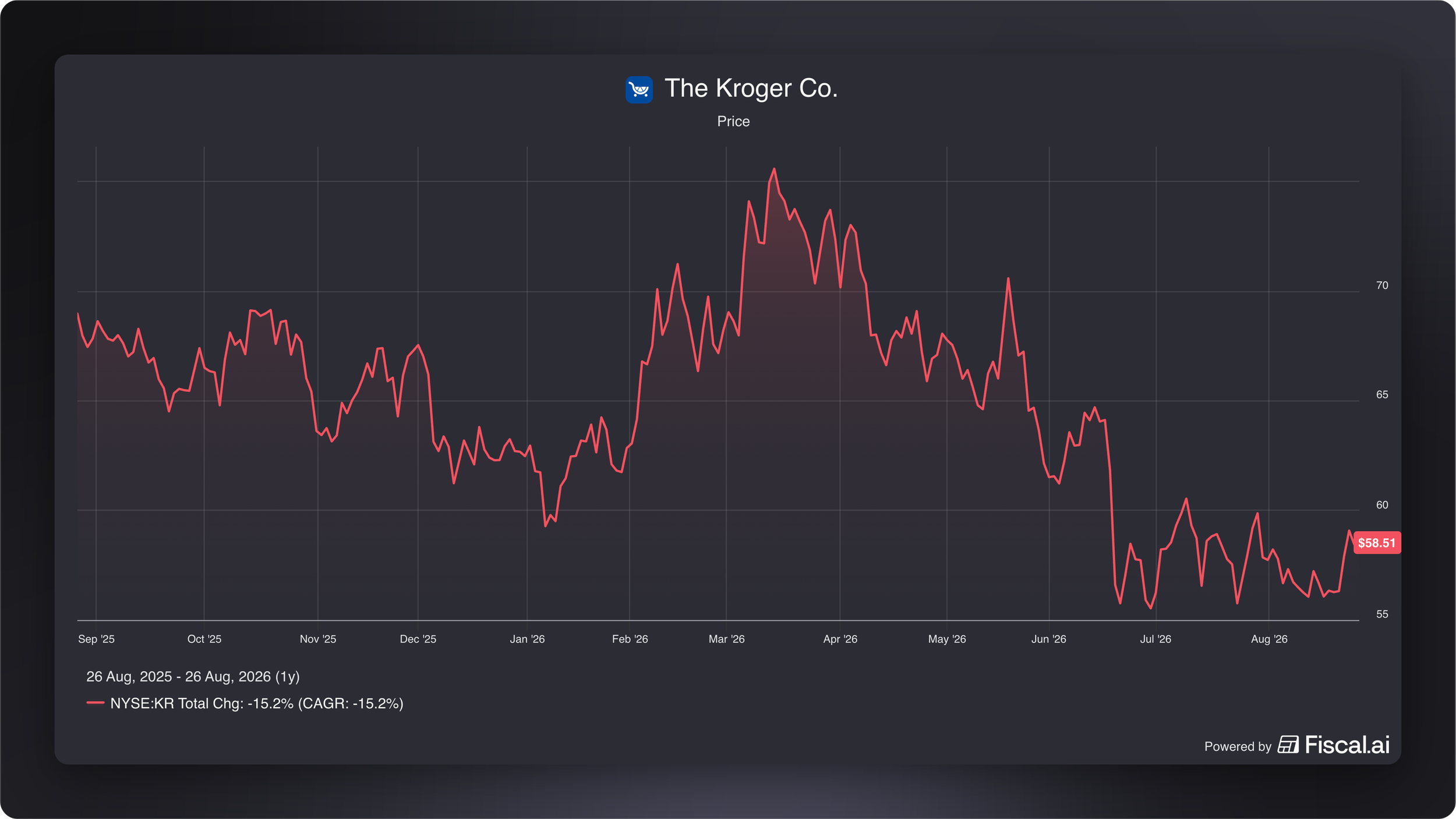
Year-to-date, Kroger’s share price is down around 7%, which is quite the departure from the market as a whole. And over the past twelve months, the performance is even worse, with the stock down about 15%.
With that said, I think a lot of the reason why Kroger’s stock has been struggling comes down to the environment that grocery retailers are having to operate in right now.
As we just talked about, consumers are becoming increasingly careful about how they spend their money, even when it comes to necessities like groceries.
That obviously isn’t ideal for any industry, but it makes things particularly difficult in the grocery business, where competition is already intense and margins are notoriously thin.
Source: Simply Safe Dividends
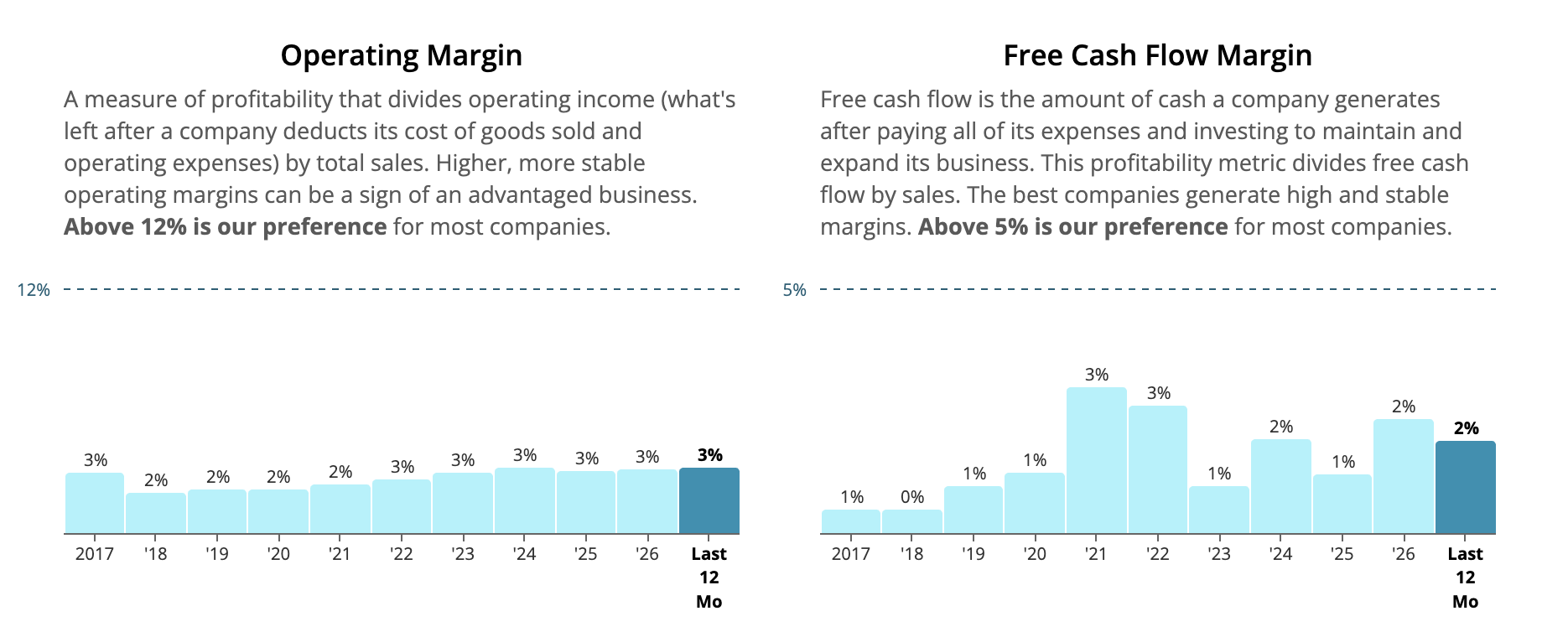
In Kroger’s case, its operating margin tends to hover between just 2–3%, with its free cash flow margin slightly below that. So there really isn’t a lot of wiggle room there.
Higher energy prices have also pushed transportation costs higher, putting even more pressure on margins at a time when grocery retailers still have to remain competitive on price.
Despite all of that, though, Kroger’s underlying business has actually held up pretty well.
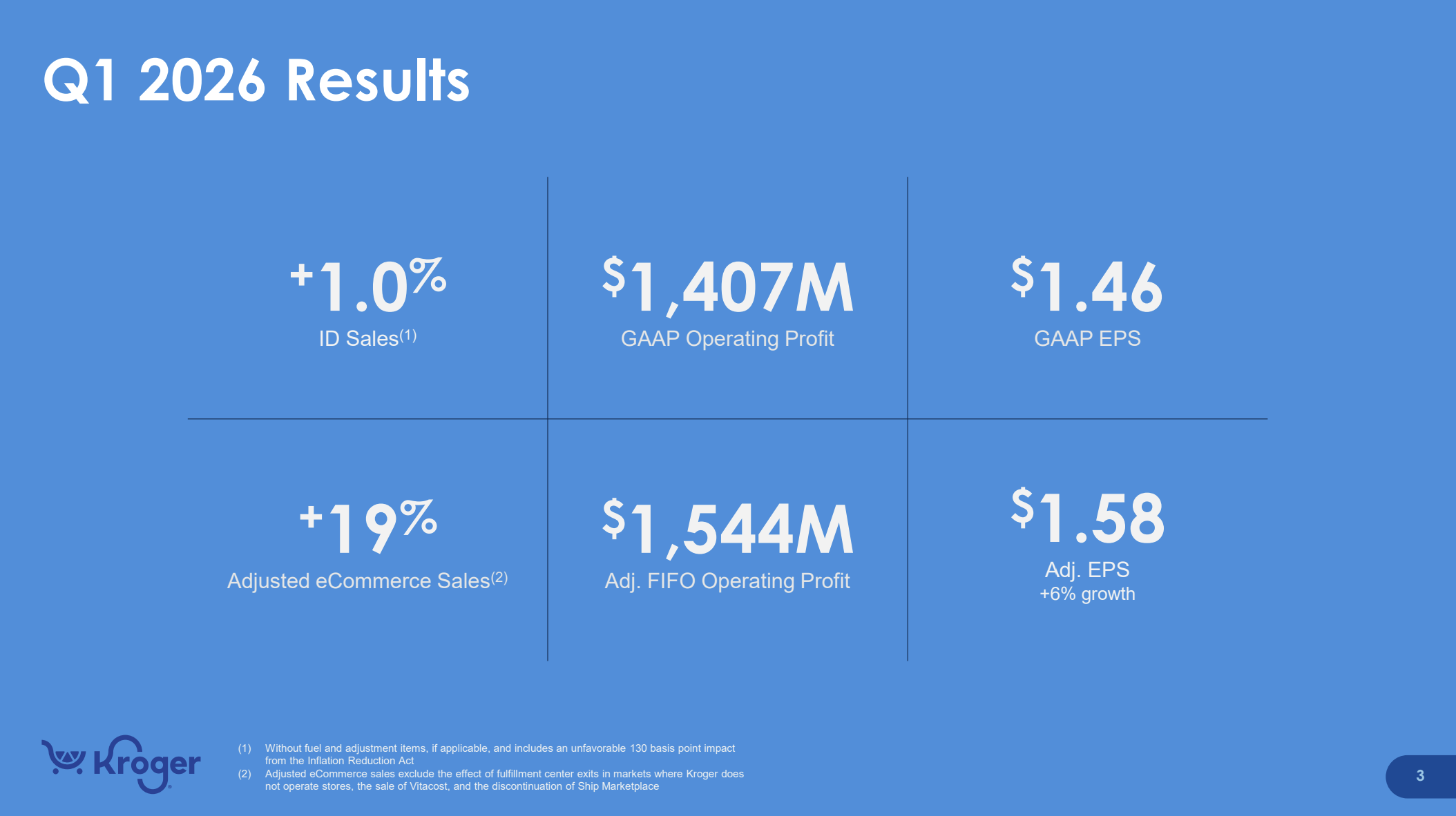
Earnings per share grew 6% last quarter, customer traffic was up, and Kroger’s loyal households have now grown for 17 consecutive quarters.
On top of that, Kroger’s private-label brands continue to perform very well. They actually outpaced national brands by almost 2 percentage points during the quarter. E-commerce sales also grew 19% and became profitable for the very first time.
Source: Simply Safe Dividends
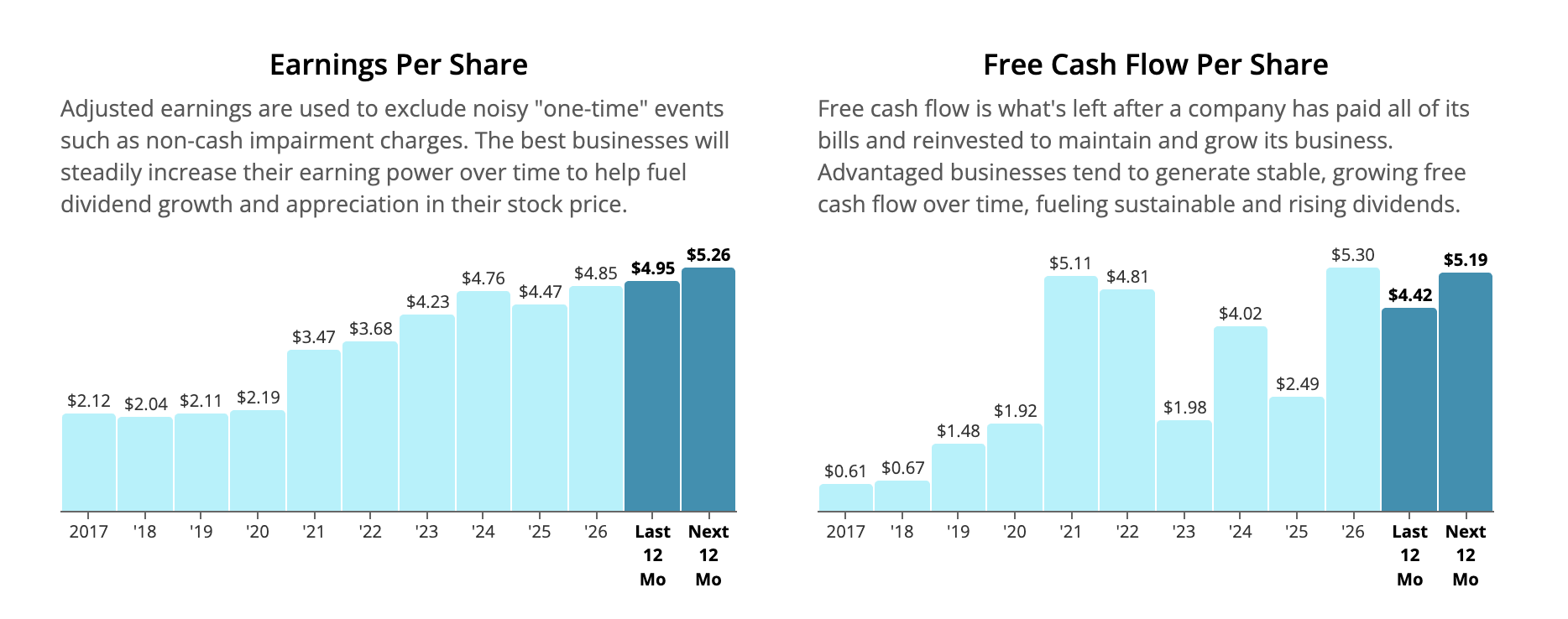
With that said, despite operating in such a low-margin industry, Kroger has a killer track record of growing both its earnings and free cash flow on a per-share basis — which, as far as the dividend goes, is exactly what you want to see.
Source: Simply Safe Dividends
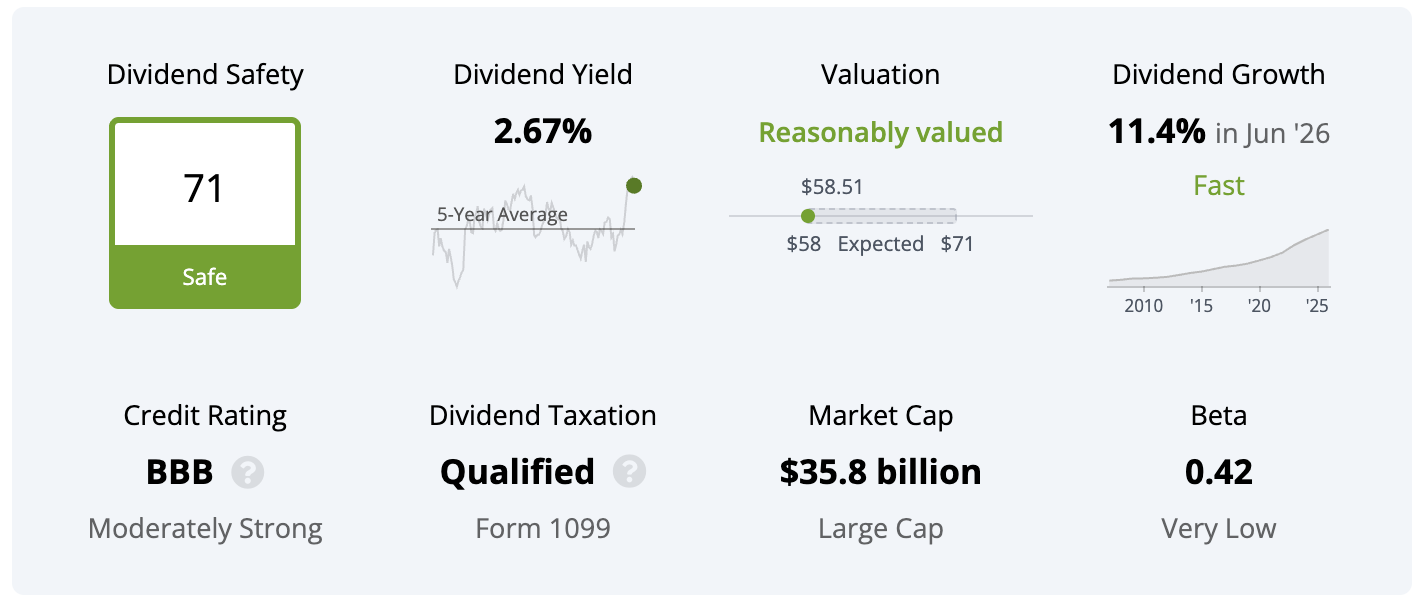
On that note, with the share price on the down-and-out, the dividend yield has been pushed up to around 2.7%, which is quite a bit above the 5-year average yield of 2.15%.
The other dividend stats look great too. The average dividend growth rate over the past five years is over 14%, they’ve been growing it for about 20 years straight, and importantly, Simply Safe Dividends gives them a dividend safety score of 71 — which means that a dividend cut is highly unlikely.
At the end of the day, people will always need to eat, and Kroger’s wide variety of grocery stores across the country give consumers plenty of options for where and how they shop.
Now obviously, that doesn’t make Kroger completely immune to a financially stretched consumer. People can trade down to cheaper products, look for more deals, or just become more selective about what they put in their carts.
But I also think Kroger is well-positioned to weather that type of environment. At the very least, considering the company has been around since 1883, this isn’t exactly their first rodeo.
In the meantime, the share price will do what the share price will do. The bright side is that shareholders are being paid a higher-than-average dividend yield while they wait for the situation to improve.
Having said that, Kroger isn't the only attractive buying opportunity out there right now. There are plenty of other stocks that look interesting, and I'd love to hear from you: Which discounted stocks do you have your eye on as we step into September? Write to me here and let me know.
Dividend Investing Democratized
Join thousands of savvy investors in the pursuit of early retirement. Get Retire With Ryne delivered straight to your inbox every week as you build your perpetually growing, cash-flowing dividend stock portfolio.
IN MY PORTFOLIO 📈
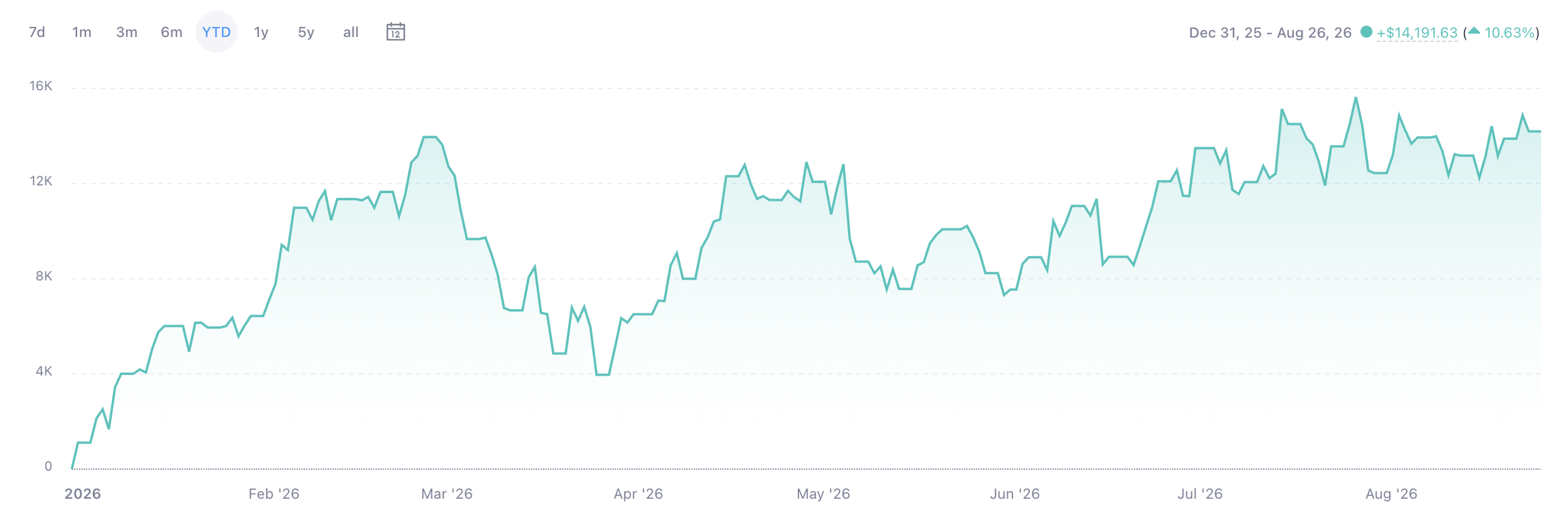
See my full portfolio with all of my holdings, trades, and dividends on Snowball Analytics! Plus, use code "rynewilliams" at checkout to get 10% off your subscription.
ICYMI 🎥
In this video, I'm taking you through my exact plan to start living off dividends in the next 15 years.
CAREFULLY CURATED 🔍
📺 The 4% Club - Russ started with 871 dividend stocks and, after screening for yield, dividend safety, growth, and valuation, narrowed the list down to just five high-yielders that might actually be worth owning.
🎧 Beyond the Big Mac - McDonald’s may be famous for burgers and fries, but underneath the Golden Arches sits a very lucrative royalty-and-rent machine. This episode of The Dividend Mailbox breaks down the business, its extensive dividend growth history, and why the stock is so cheap right now.
📚 Yes, They Can - You probably see Ball’s logo every day without thinking twice about it, but the company behind it ships more than 100 billion cans every year. Quartr takes a deep look into how this 145-year-old business went from glass jars and satellites to becoming the undisputed king of aluminum cans.
SINCE YOU ASKED 💬
"If I’m following correctly, you started DRIPing earlier this year. I remember you saying previously that you didn’t DRIP. Can you tell us what went into the decision to start?"
- Nico | YouTube
When it comes to DRIPing my dividends, I’ve actually gone back and forth on this a couple of times over the years.
When I first started investing, I automatically reinvested all of my dividends. As a beginner, I had learned that that's just what you do, and I figured that since I was actively trying to build out all of my positions, DRIPing my dividends would help in those efforts.
Eventually, though, once I was bringing in around $100–$150 per month in dividends, I decided to turn the DRIP off. At that point, the income had become a meaningful enough chunk of change that I could collect it and manually reinvest it into whichever one or two positions I was actively trying to build at the time.
I did that for a few years, and I think it worked out just fine. But over the past year or so, I started noticing an unintended consequence.
I’d look around my portfolio and see companies like AbbVie (ABBV), Snap-On (SNA), and Williams-Sonoma (WSM) — which are all businesses I really like and have been great investments for me — but I hadn’t added to them in a long time.
Part of the problem was that because they had been such great investments, their share prices had gotten pretty far away from my cost basis. I had become anchored to that cost basis and found it difficult to buy shares at much higher prices, even though I still liked the businesses.
As a result, I didn't add anything to them for a number of years. And over time, some of these companies became smaller and smaller weightings in my portfolio as I continued allocating new money elsewhere.
Turning the DRIP back on was my way of partially forcing myself to overcome that bias. The dividends automatically buy more shares for me regardless of where the share price is relative to my cost basis, and I get to continue building positions in companies that I might otherwise neglect.
The other reason I decided to turn the DRIP back on is simply because it’s one less decision I have to make.
It’s similar to why I like automatically dollar-cost averaging into the ETFs in my Roth IRA. The more I can put certain parts of my portfolio on autopilot, the fewer decisions I have to make. Things can just grow out of sight, out of mind.
With that said, I don’t think there’s a right or wrong way to do this. Obviously, I’ve automatically and manually reinvested my dividends at different points over the years, and I think both come with their own set of benefits.
And who knows? There may come a time when I switch back to manually reinvesting dividends again. But for now, I’ve been enjoying having a little more on autopilot, so I’m going to keep rocking with it.
Have a question? Ask me here to see it featured in an upcoming newsletter.