Disclaimer: This page contains some affiliate links that might just lead you to the promised land of awesomeness (or at least some cool products). I may receive commissions for purchases made through links in this post.
About six years ago, I started investing completely from scratch with no experience, no finance background, nothing. Today, I have a dividend portfolio worth almost $160,000 that pays me just over $400 every single month.
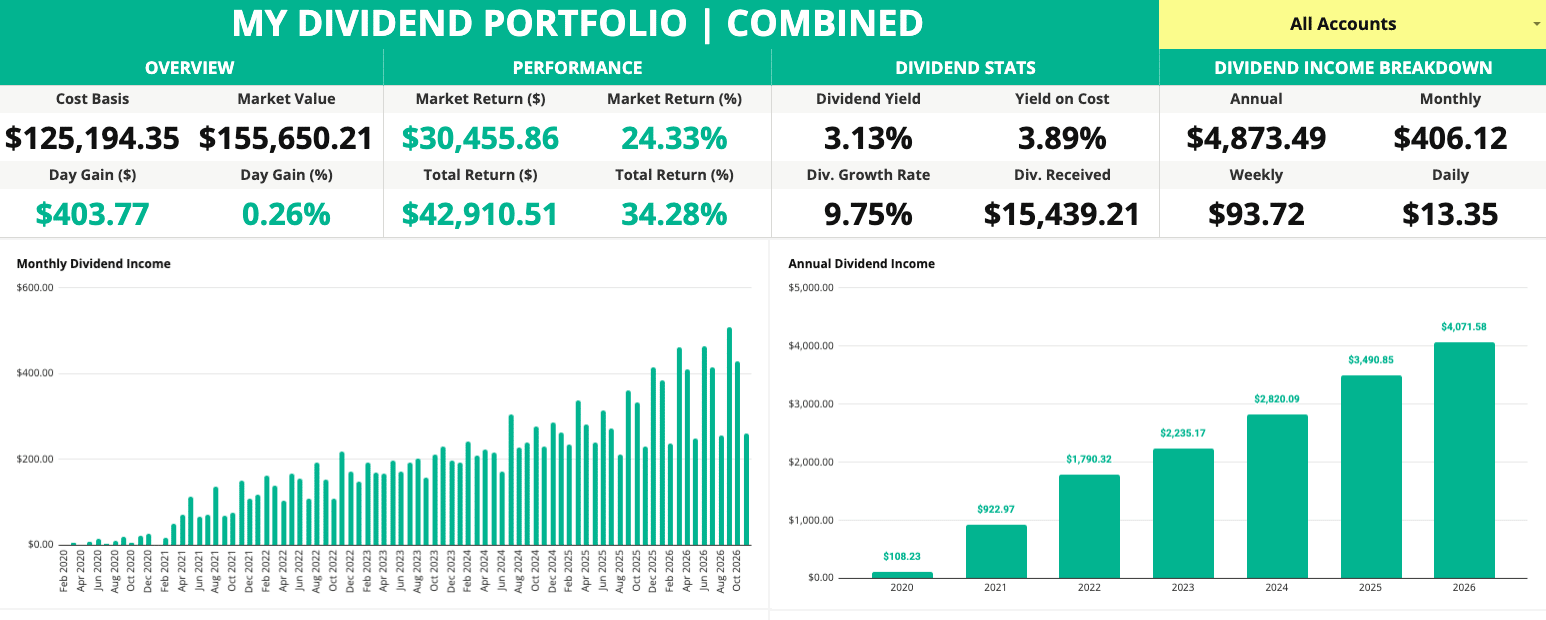
Source: My FREE Dividend Portfolio Tracker (New Version Coming Soon)
Here's the fortunate part (or the unfortunate part, depending on how you look at it): building a portfolio like this — and one much bigger — is pretty simple. It just isn't always so easy.
The process to reach financial freedom can be boiled down to one repeatable process that I call the BRRR method. And I know there's a BRRRR method in real estate, but mine is a little different.
This one stands for Buy stocks, Receive dividends, Reinvest them, and Repeat. I'll go through the first three parts of the method pretty quickly because the last one is the part I think most investors have a difficult time with.
1. Buy
I don't really want to tell you exactly what to buy. I think that if you’re managing your own portfolio, it’s your responsibility to do the research and make those decisions for yourself.
But at a very basic level, in my opinion, the best companies to own are those that are growing their earnings and free cash flow, don’t have too much debt, and have a history of paying and growing their dividends.
At the end of the day, the only companies that can consistently pay and grow their dividends for a long period of time are the ones that can financially support it, and financially strong businesses are the ones I'd want to own anyway.
For brand new investors, the good news is that you don't have to look for these kinds of businesses by scouring the internet or learning how to dig through financial statements. You can just invest in exchange traded funds, or ETFs, which are basically big baskets of stocks you can buy all at once.
ETFs are great because they take the guesswork out of investing. I personally invest in two of them every week in my Roth IRA: VOO and SCHD.

Source: Public
VOO is an S&P 500 ETF, so it isn't necessarily a dividend fund. But it gives me exposure to 500 of the largest companies in the United States, which has proven to deliver great returns over a long period of time.
SCHD is the dividend fund (I call it the holy grail of dividend ETFs), and it already screens for many of the qualities I mentioned above. I like the split between these two funds because it gives me a solid mix between share price appreciation and dividend income that grows over time. What more could you want?
The cool thing about living in the modern world of investing is that you can automate the entire process, too. My brokerage buys VOO and SCHD for me every week, so I don't have to think about it or be hands-on with it at all. Wealth on autopilot.
2. Receive
The truth about reaching financial freedom is that it really is as straightforward as building up your portfolio to the point where your dividend income can cover all of your bills. That simplicity is one of the things I like about dividend investing, and it makes the progress along the way easy to measure too.
Another thing I like about dividend investing is that your returns aren't determined solely by the movement of the share price. Psychologically, I think that makes it a lot easier to stay invested, especially when the market is going haywire.
I think dividends are a lot more predictable than share price movements too, which can go in either direction for a myriad of reasons that have nothing to do with what’s actually going on with the business.
A company can cut its dividend at any point, true, but a company with a dividend policy is going to stick to it until further notice. And the warning signs of a dividend cut typically show up well in advance of the cut.
The fact of the matter is that if a company doesn't have the earnings or free cash flow to support its dividend, it can't keep paying it for long. You can't fake a dividend. And the more time I spend as an investor, the more I appreciate that.
3. Reinvest
Now when it comes to reinvesting your dividends, you've got a couple of options. You can automatically reinvest your dividends into the positions that paid them, or you can collect them as cash and manually reinvest them however you’d like.
I've done it both ways over the years. But right now, just to keep it simple, I have everything set to automatically reinvest.
Either way, though, if you're not using your dividends to pay your bills, you should absolutely reinvest them. To show you how much of a difference reinvesting dividends can make over a long period of time, here's a quick comparison.
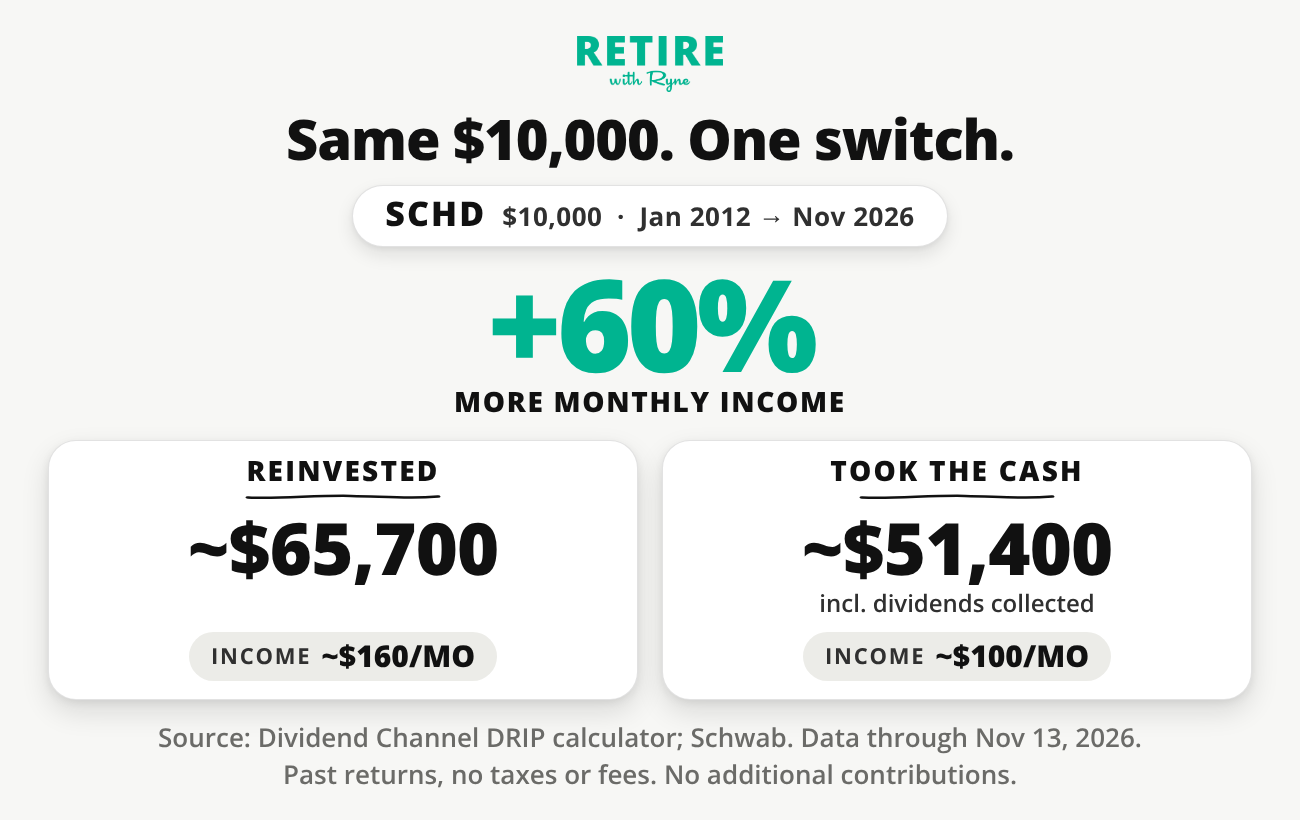
If you had put $10,000 into SCHD at the start of 2012 and reinvested every single dividend, you'd have about $65,700 today, without making any additional contributions.
If you had taken those dividends as cash instead, you'd have about $51,400, and that's including all of the dividends you collected along the way.
It's not just the portfolio value that would see the impact, either. The reinvested $10,000 would now be paying you about $160 a month, versus about $100 a month if you didn’t reinvest.
That's 60% more income from the exact same investment — not too shabby.
4. Repeat
From what I've found, building a successful dividend portfolio really does come down to being consistent, being patient, and repeating this process year after year after year. It's also the part most investors struggle with, and I think there are a few reasons why.
First, some investors may be trying to build a dividend portfolio when it just isn't the right approach for them.
Personally speaking, being a dividend investor fits me like a glove, which is why it's an easy strategy for me to stick with. But if it doesn't align with what you want, this strategy will be hard for you to adhere to over a long period of time.
Some investors just need to look in the mirror and admit this isn't their strategy, and that's totally fine. There's more than one way to skin the cat, and the sooner you figure out which method to the madness makes sense for you, the better off you’ll be.
Second, shiny object syndrome and FOMO are rampant in the stock market. That’s been true throughout history, but I do think social media has amplified these sensations quite a bit.
When you’ve spent the past few years seeing your friends, neighbors, and people online getting crazy returns from the likes of Nvidia (NVDA), Sandisk (SNDK), Micron (MU), and their ilk, that can wear on you. And at a certain point, that may cause you to give in to the temptation and start chasing those returns for yourself.
The truth about building a portfolio, though, is that it’s not a competition. And if it is, it's you vs. you. It's really just about putting one foot in front of the other and being a little farther along today than you were yesterday.
That's pretty much all I've done for the past six years: Buy, Receive, Reinvest, and Repeat. It’s pretty simple, in theory. But following through on it over the long haul is easier said than done.
With that said, I'd love to hear from you: which part of the BRRR method is hardest for you to stick with? Write to me here and let me know.
Dividend Investing Democratized
Join thousands of savvy investors in the pursuit of early retirement. Get Retire With Ryne delivered straight to your inbox every week as you build your perpetually growing, cash-flowing dividend stock portfolio.
IN MY PORTFOLIO 📈
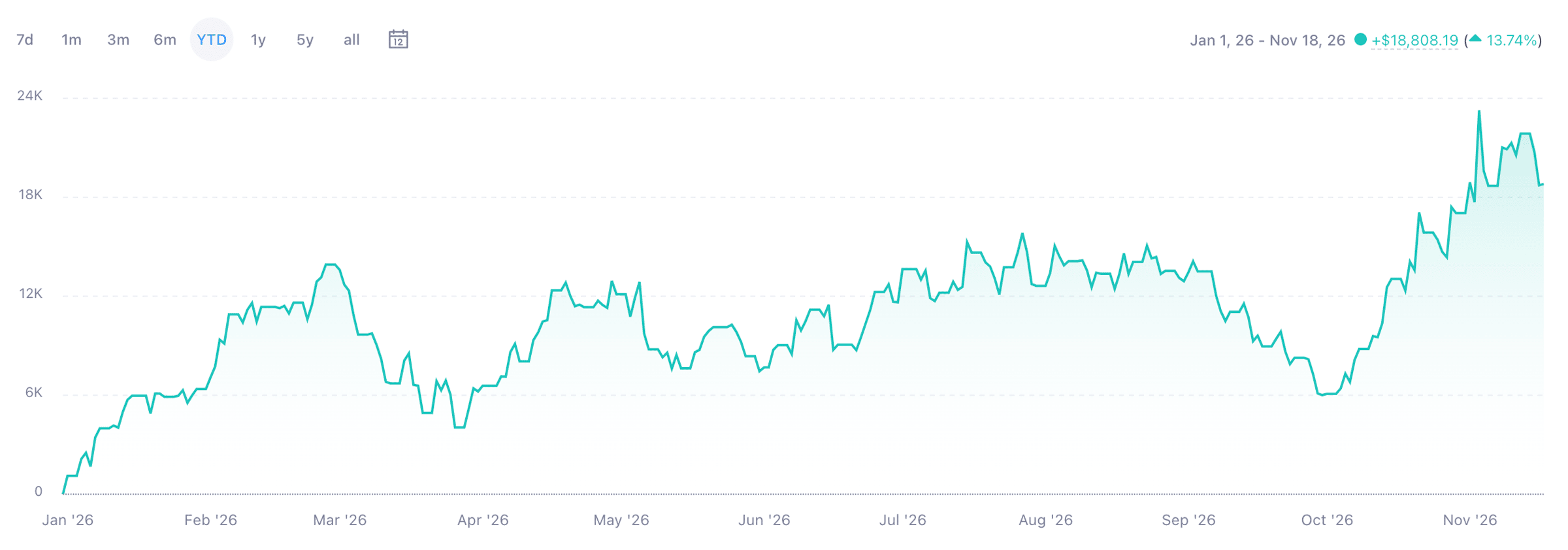
See my full portfolio with all of my holdings, trades, and dividends on Snowball Analytics! Plus, use code "rynewilliams" at checkout to get 10% off your subscription.
ICYMI 🎥
The Perfect $380K Portfolio?
In this subscriber portfolio review video, I might have just found the perfect portfolio. If nothing else, I’m jealous of the six-figures in profits it’s currently sitting on.
CAREFULLY CURATED 🔍
📺 Four Million Reasons Why - An inside look at GenEx Dividend Investor's $4 million portfolio, which shells out around $15,000 in dividends every single month.
🎧 Compounding Conundrums - Selling a great business too early can be one of the most expensive mistakes an investor makes. Chris Davis and Robert Hagstrom talk about how to balance letting your winners run and knowing when enough is enough.
📚 BDC Bargains - Private credit has been getting beaten up lately, and BDCs have been in the ring of fire. But as Michael Lebowitz explains, some of these high-yielders might be great buys hiding in plain sight.
SINCE YOU ASKED 💬
"Would you be comfortable putting 100% of your portfolio in Realty Income (O) when you are about to retire to receive a higher payback every month?"
- WalletInvestUSA | YouTube
This is a really fun question, and the short answer is no.
That's not a knock against Realty Income (O) either, by the way. If I were to put 100% of my wealth into one company, I think I could do worse than "The Monthly Dividend Company." I just wouldn't feel comfortable putting 100% of my portfolio into any individual company.
Plus, I don't really see the benefit of doing that, especially in retirement when I'd be relying on the dividends from my portfolio to fund my lifestyle. At that point, I actually think I'd want to be a bit more diversified, if for no other reason than to protect that income stream.
The way I see it, the more diversified my portfolio is, the less any one individual company can negatively impact my overall income. If one of my holdings were to fall on hard times and had to cut its dividend, I'd much rather have that represent a small portion of my income than the entirety of it.
That's not to say diversification doesn't come with its own set of pros and cons. But when I'm retired and actually relying on those dividends, I think protecting that income will become an even bigger priority than it is today.
Having said that, depending on what my portfolio's dividend yield and yield on cost look like when I eventually do start pulling dividends, I wouldn't be opposed to making some adjustments to generate a little more income.
Maybe that means allocating more of my portfolio toward higher-yielding investments or reconfiguring the portfolio somewhat to increase its overall yield. But I'd only want to do so if it was actually necessary, and more importantly, if I could do it without negatively impacting the safety of the income I'm receiving.
My hope, though, is that by starting to invest as early as I have and giving my dividends plenty of time to grow, that won't be something I need to do. But we'll just have to cross that bridge when we get there.
Have a question? Ask me here to see it featured in an upcoming newsletter.
LAST WORD 👋
If you haven’t already, you should check out my FREE Discord group. Think of it as one big group chat with over 3,500 dividend investors who are just as obsessed with this stuff as you are.
It’s a positive, no-drama community where people share their buys, sells, and dividend income, and talk stocks 24/7. Whether you’re just starting out or you’ve been at it for years, you’ll find people ready to answer questions, celebrate wins, and help you grow as an investor.
It’s totally free to join, and I think you’ll get a ton of value out of being part of the community.