The “Money Maker” Moat

Disclaimer: This page contains some affiliate links that might just lead you to the promised land of awesomeness (or at least some cool products). I may receive commissions for purchases made through links in this post.
By now, you’re probably familiar with the idea of a moat as it relates to business and investing.
If not, a moat is just a way of describing a company’s competitive advantage. The thing that keeps it competitive and protects it from being pushed out by its peers.
Moats come in all different shapes and sizes. It could be a recognizable brand (think Nike, Starbucks, and McDonald’s), the ability to operate at a lower cost and pass those savings on to customers (think Amazon), or network effects, where the product becomes more valuable as more people use it (think Visa, Mastercard, and any social media platform).
The idea of moats, or durable competitive advantages, was popularized by Warren Buffett (of course), who has written extensively about their importance when evaluating businesses.
Without some kind of moat—without something defensible and hard to replicate—Buffett would argue that a business will have a hard time growing, let alone surviving for the long term.
A few days ago, I was reading through one of Buffett’s shareholder letters from 2006 (you can read my full notes here), and I came across a type of moat that I don’t hear talked about too often.
He was talking about one of their portfolio companies, ISCAR. He wrote:
ISCAR’s products are small, consumable cutting tools that are used in conjunction with large and expensive machine tools. It’s a business without magic except for that imparted by the people who run it. But Eitan, Jacob and their associates are true managerial magicians who constantly develop tools that make their customers’ machines more productive. The result: ISCAR makes money because it enables its customers to make more money. There is no better recipe for continued success.
That last line really stood out to me. ISCAR makes money because it helps its customers make more money.
I’m sure there’s a formal name for this type of moat, but I like to call it the “money maker” moat. It’s actually one of my favorite competitive advantages, and I see it show up in a few of the companies I own.
For example, Watsco (WSO) has been building this type of competitive advantage through its suite of software like OnCallAir and Housecall Pro. These tools help Watsco’s customers (HVAC contractors) run their businesses more efficiently, close more jobs, complete those jobs faster, and ultimately generate more revenue.
The reason I like this type of moat and think it’s so powerful is because it creates a win-win, non-zero-sum situation between all parties involved.
Watsco benefits because it sells more HVAC equipment. Contractors benefit because they’re running better businesses and making more money (and probably also creating long-term repeat customers in the process).
Even the end customer benefits from a smoother, more efficient experience working with these contractors. Really, everyone is better off.
And when a business is directly helping its customers make more money, it becomes much harder to replace, which naturally leads to higher switching costs and longer lasting business relationships.
In other words, when your success is tied to your customer’s success like that, it creates good incentives in more ways than one. And over time, that can turn into a very durable and deep-rooted competitive advantage.
Can you think of any businesses that possess this “money maker” moat? Write to me here and let me know.
Dividend Investing Democratized
Join thousands of savvy investors in the pursuit of early retirement. Get Retire With Ryne delivered straight to your inbox every week as you build your perpetually growing, cash-flowing dividend stock portfolio.
IN MY PORTFOLIO 📈
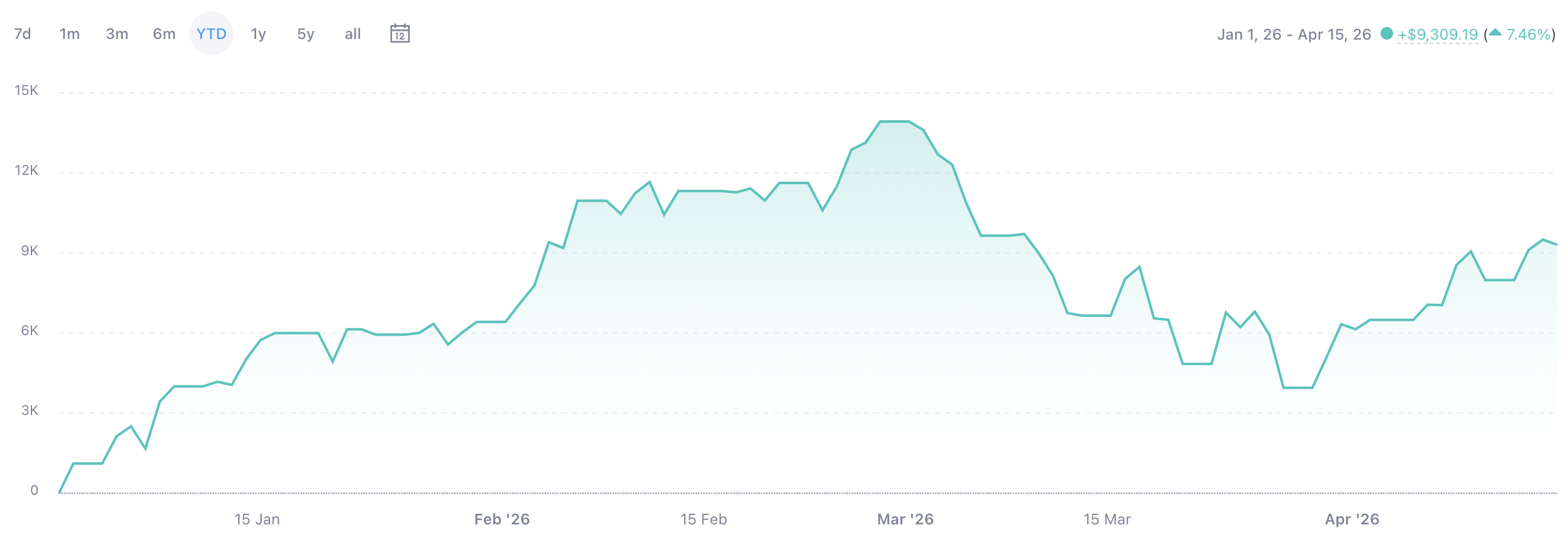
See my full portfolio with all of my holdings, trades, and dividends on Snowball Analytics! Plus, use code "rynewilliams" at checkout to get 10% off your subscription.
ICYMI 🎥
What Most Investors Get Wrong About Diversification
In this episode of The Deep End, we dive into what most investors get wrong about diversification. While it’s a surefire way to reduce risk, too much diversification can actually dilute your best ideas and limit your upside.
CAREFULLY CURATED 🔍
📺 Private Credit Reckoning - There’s been a lot of noise around private credit lately, but this video from Drew Cohen does a great job breaking down all the details.
🎧 35 Years Strong - A great episode of the Dapper Dividends podcast featuring Adam Kahn, who talks through some lessons learned after more than three decades of real-world investing experience.
📚 Tech Reality Check - A data-heavy slide deck from Redpoint breaking down what’s actually happening across the tech landscape right now. The big takeaway is that growth is getting harder to find, capital is more selective, and the gap between winners and everyone else is getting wider.
SINCE YOU ASKED 💬
"What if I just buy VOO, hold it until retirement, collect the dividend, and follow the 4% rule?"
- Christopher | YouTube
I don’t think that’s a bad approach at all. Just dollar-cost-averaging into the S&P 500 for a long period of time has historically been one of the most reliable ways to build wealth.
And following the 4% rule in retirement, which is where you withdraw about 4% of your portfolio each year to fund your lifestyle, is a very common approach. Still, with that approach, there are a couple of concerns to be aware of.
One of the biggest concerns is the risk of running out of money. As people live longer, that becomes more of a real possibility. The 4% rule is intended to mitigate that risk, but it can't entirely eliminate it since it is at least somewhat at the mercy of the market's performance.
That brings us to the other big concern, which is something called sequence of returns risk. In a nutshell, if the market drops substantially early in your retirement and you’re forced to sell shares to cover your expenses, you'd be forced to sell at lower prices.
That means you have to sell more shares than you otherwise would have, which means you're dwindling down your assets at a faster rate, and that can put pressure on your portfolio long-term.
That’s actually one of the reasons I personally gravitate toward dividend-paying stocks. The ultimate goal is to generate enough income from dividends so I don’t have to rely as much (or at all) on selling shares, especially during down markets.
Having said that, another option you could consider is sticking with VOO as you work on growing your portfolio, and then shifting into something with a higher yield as you get closer to retirement. Even something like SCHD could help increase your income and reduce the need to sell shares once you reach that stage.
At the end of the day, though, your plan is totally reasonable. There is no perfect strategy, and the one you should choose just comes down to understanding the risks and choosing what you're most comfortable with.
Have a question? Ask me here to see it featured in an upcoming newsletter.