
PRESENTED BY SNOWBALL ANALYTICS
Disclaimer: This page contains some affiliate links that might just lead you to the promised land of awesomeness (or at least some cool products). I may receive commissions for purchases made through links in this post.
I’m not going to lie, the past few weeks have been quite an adjustment. After more than six months of maternity leave, my wife officially went back to work, which means I’m now on dad duty for a few full days each week.
Now don’t get me wrong, I wouldn’t have it any other way. I feel very fortunate that our situation allows for that and that we don’t have to send our baby off to childcare.
I love that I get to spend so much time with her, but it’s undeniably made it more difficult to get work done.
One of the things that’s fallen by the wayside—not just the past couple of weeks, but really the past couple of months—has been my stock research.
Now, one of the great benefits of being a long-term investor in dividend-paying stocks is that you don’t have to constantly be doing research. You really don’t need to pay much attention to the day-to-day noise of the market, so I haven’t missed much at all.
But still, I like being in the loop. It’s important for my job of making YouTube videos and writing this newsletter. And beyond that, this is also my hobby. I thoroughly enjoy it.
These past couple of months, though, it’s been tough to carve out time for dedicated research and analysis. The limited time I do have has to go toward making videos, writing the newsletter, and, of course, being a good dad and husband.
But I’ve had this increasing itch for more information. I’ve been yearning to start turning over rocks again, and to get back into the routine of looking at businesses. And I think I may have just found the perfect tool—and workflow—to help me do exactly that.
For the past couple of weeks, I’ve been playing around with a tool from Google called NotebookLM. In a nutshell, this is an AI-forward study companion designed to help you learn about new subjects.
You can create different notebooks, upload whatever sources you have on a subject, and then it teaches you the material in whatever format you want. It can generate reports, slide decks, flashcards, video overviews—or my personal favorite so far, audio overviews.
These audio overviews have been incredible. They’re basically custom-made, personalized podcasts on whatever you want to learn.
In my case, I’ve been using them to create in-depth deep dives on companies I want to learn about. All I have to do is upload the sources (company 10-Ks, 10-Qs, earnings call transcripts, investor presentations, etc.), tell it specifically what I want to learn, and NotebookLM spins it up for me.
If you want to check it out and get a feel for what these audio overviews sound like, I’ve uploaded a handful of them to my Google Drive. You can listen to them here.
I should’ve said this earlier, but this isn’t sponsored by Google…unfortunately. I just genuinely feel like, out of all the tools I’ve tried (and out of all the new AI platforms popping up), this has been the most impactful for me so far.
For me, being able to listen to these audio overviews has been the perfect way to stay on top of all the research I want to do. Each one runs about 40–50 minutes, which makes them ideal for a run or even just while I’m at home with the baby.
And the best part is: NotebookLM is completely free.
With that said, now I’d love to hear from you: What tools do you use the most in your stock research workflow? Write to me here and let me know.
Dividend Investing Democratized
Join thousands of savvy investors in the pursuit of early retirement. Get Retire With Ryne delivered straight to your inbox every week as you build your perpetually growing, cash-flowing dividend stock portfolio.

One of the most essential tools for any investor is a reliable portfolio tracker, and Snowball Analytics is the ultimate command center for your portfolio, providing all the tools you need (and more) in one place.
Plus, it’s one of the only portfolio trackers out there designed specifically for dividend investors.
The layout is clean and intuitive, offering charts, graphs, and other features you didn’t even know you needed but now can’t live without—like the dividend calendar, portfolio backtest tool, and the dip finder tool (this has been a game changer).
I’ve been using Snowball for a couple of years now, and it's the most in-depth portfolio tracker I’ve ever used (you can see my entire portfolio on Snowball here). I highly recommend it to any dividend investor looking for maximum functionality and data for tracking their portfolio.
Right now, Snowball Analytics is offering a 14-day FREE trial so you can try it out risk-free. The best part is, if you end up loving it (which, as you'll find out, is not hard to do), you can save 10% on your subscription when you use code “rynewilliams” upon signing up.
IN MY PORTFOLIO 📈
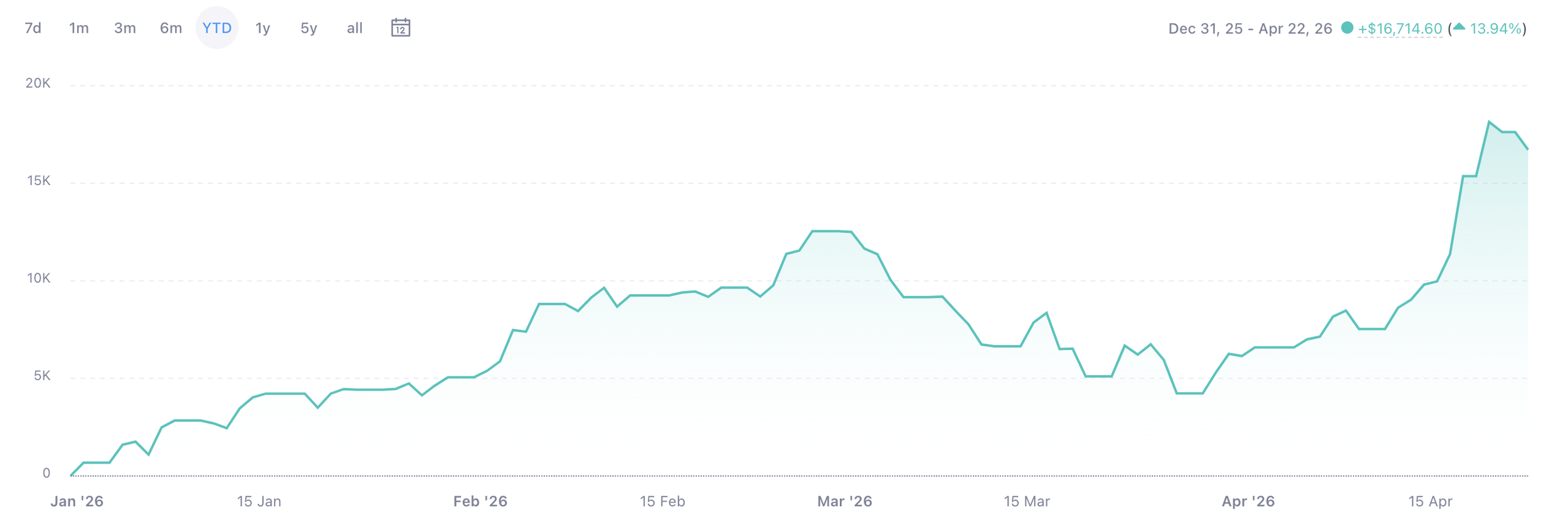
See my full portfolio with all of my holdings, trades, and dividends on Snowball Analytics! Plus, use code "rynewilliams" at checkout to get 10% off your subscription.
ICYMI 🎥
What’s REALLY Driving the Stock Market Right Now
In this episode of The Deep End, we dive into what’s been going on in the stock market lately. And more importantly, what might actually be driving it.
CAREFULLY CURATED 🔍
📺 Royal Raises - PPC Ian's latest video breaks down the latest dividend increases from JNJ and PG.
🎧 Survival First - A great episode of the Talking Billions podcast with Vitaliy Katsenelson breaking down how value investing is evolving in a world driven by AI.
📚 Built To Last - Eric Markowitz's latest article from Big Think argues that true business resilience comes from strong relationships, patient growth, and consistent maintenance over time.
SINCE YOU ASKED 💬
"I would love to hear your thoughts on investing in 'competing' stocks. I have a position in Visa already, but have been looking into Mastercard as well."
- DG Weekly | YouTube
It’s a really good question. In general, I’m not a big fan of owning “competing” stocks. I tend to be more of a one-or-the-other kind of guy.
Visa (V) and Mastercard (MA) are a great example. The businesses are so similar, and they’re going to be impacted by the same tailwinds and headwinds, so I’d rather just pick the one I like most instead of owning both.
I feel the same way about something like Home Depot (HD) and Lowe’s (LOW). In my mind, they’re incredibly similar businesses, so I don’t really see much of a point in owning both.
Yes, you get a bit more diversification on paper. But if the businesses are that alike, it starts to feel more redundant than anything else.
Will it hurt you to own both? Probably not. But will it noticeably improve your portfolio? I don’t think so.
Have a question? Ask me here to see it featured in an upcoming newsletter.