Your Portfolio Needs to Dodge Wrenches
Disclaimer: This page contains some affiliate links that might just lead you to the promised land of awesomeness (or at least some cool products). I may receive commissions for purchases made through links in this post.
Believe it or not, the movie Dodgeball can teach you a lot about investing.
On the surface, Dodgeball is a “true underdog story,” as the movie’s subtitle suggests. Peter La Fleur and the Average Joe’s defy the odds to ultimately defeat Globo Gym and save Average Joe’s from bankruptcy (spoiler alert - sorry).
And while that might not seem like it has anything to do with investing, beneath all the ridiculousness that happens throughout the movie, there’s actually a pretty valuable lesson hidden inside the story that we can all learn from.
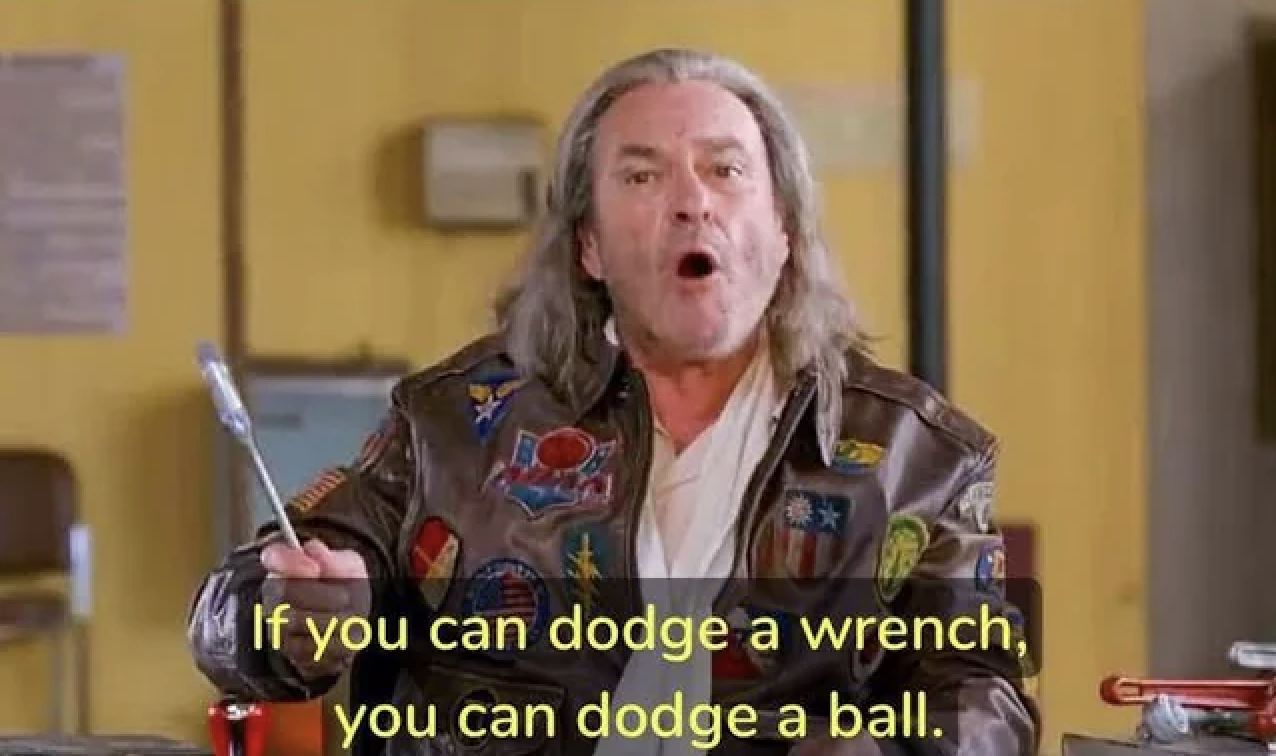
You see, the stock market is a lot like Patches O’Houlihan (the Average Joe’s dodgeball coach) in the sense that it has a tendency to chuck wrenches at your head, typically when you least expect it.
This happens in life too, of course. And although you can’t predict when these unexpected curveballs will get thrown at you (if you could, they wouldn’t be curveballs), you can position yourself and your portfolio in a way where you can mitigate their damage.
That’s a lot of what portfolio management is, actually. It’s about positioning yourself for a wide range of possible outcomes, including the ones you won’t see coming. It’s about resilience.
When I look around the stock market right now — where certain stocks in a certain sector seem to be hitting new all-time highs every single day — and I watch investors continue piling into these things that just keep going up and up and up (even after they’ve already gone up and up and up), I don’t see a lot of regard for resilience.
Instead, I see a lot of White Goodman.
White Goodman (the antagonist in the movie) was on top of the world. He had the fancy gym, the good physique, and all the success, confidence, and money in the world. He was invincible, or so he thought.
As it turned out, that mindset ultimately became his downfall. He became arrogant and overconfident to the point of cockiness. And in so doing, he developed amnesia for the possibility that things could go wrong.
The idea that bad things happen to other people — and not him — became ingrained in the way he behaved in the world and treated other people. And I think investors can fall into that same trap sometimes, especially during a period where share prices only seem to move in one direction.
Eventually, people start believing the recent past is how the rest of time will continue to play out. Resilience becomes irrelevant. Risk goes unregarded. Patches O’Houlihan gets forgotten.
Naturally, Peter La Fleur (the protagonist) and the Average Joe’s were the complete opposite of White Goodman, and all sorts of things went wrong for them along the way.
They lose their first match to a group of girl scouts. Patches dies. They end up with the wrong uniforms. They nearly have to forfeit the big dodgeball tournament.
Throughout the movie, they just kept getting hit in the face — sometimes literally. But despite all of that, they stayed resilient, stayed humble, and most importantly, they stayed optimistic.
One of Peter La Fleur’s key character traits was this underlying belief that things were probably going to work out in the end. Not because he thought life would be perfect or easy, but because he understood that setbacks are just part of the process, and you keep moving forward anyway.
That mindset obviously matters a lot in investing too. Despite whatever wrenches the market throws at you, you have to believe that things will be better down the road than they are today.
But for that to be true, your portfolio (and you, as the one running it) have to be resilient. You have to build a portfolio that can dodge, duck, dip, dive, and dodge when it needs to.
With all of that said, now I want to hear from you: How do you personally stay resilient as an investor when the market inevitably throws curveballs your way? Write to me here and let me know.
Dividend Investing Democratized
Join thousands of savvy investors in the pursuit of early retirement. Get Retire With Ryne delivered straight to your inbox every week as you build your perpetually growing, cash-flowing dividend stock portfolio.
IN MY PORTFOLIO 📈
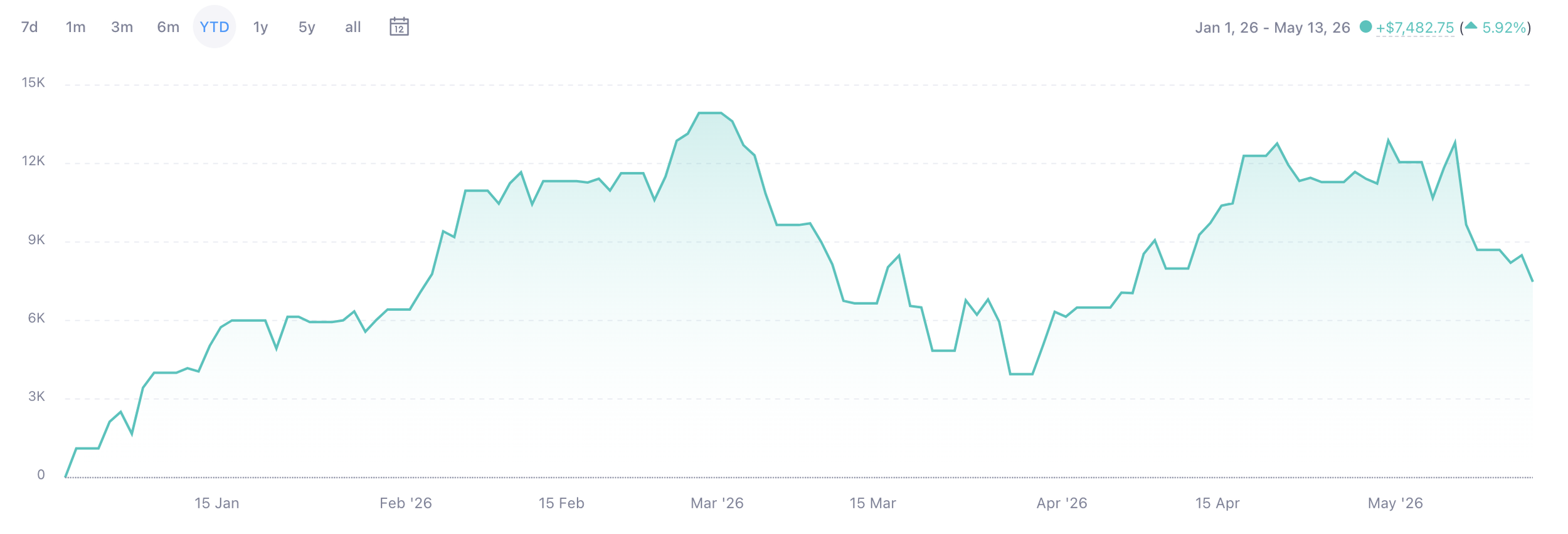
See my full portfolio with all of my holdings, trades, and dividends on Snowball Analytics! Plus, use code "rynewilliams" at checkout to get 10% off your subscription.
ICYMI 🎥
We’re Entering a New Tech Era
In this episode of The Deep End, we talk about concentrated investing, why Ari sold out of the S&P 500, and the massive $40,000 bet he just made on a single stock.
CAREFULLY CURATED 🔍
📺 Investing Must-Reads - If you enjoy reading as much as I do, then you’ll really like this video from Brian Dean, where he shares his top five investing books.
🎧 Mental Models - This podcast episode from Mohnish Pabrai offered an important reminder for investors: Take a simple idea, and take it seriously.
📚 Sharpening The Axe - A lot of people think becoming a better investor is all about reaching a certain number in their portfolio. Bogumil Baranowski disagrees. In his latest article, he explains how improving your investing skillset is really a process that you commit to for life.
SINCE YOU ASKED 💬
"What are the downsides of dividend stocks?"
- RM_3D | YouTube
This is a great question. There are a handful of downsides to dividends that people like to point to.
The biggest one is taxes. Unless you're investing inside a Roth IRA, you generally have to pay taxes on your dividend income in the year you receive it.
There are two main types of dividend taxation. Qualified dividends, which come from “normal” companies like PG, KO, or MSFT, are taxed at the lower long-term capital gains rate, which currently caps out at 20% depending on your income level.
Then you have ordinary (or unqualified) dividends, which are more common with things like REITs and BDCs. Those are taxed as ordinary income, which can go as high as 37% depending on your tax bracket.
Another argument people make is that if a company pays a dividend, it must not have better uses for that cash, or that it no longer has meaningful growth opportunities. In some cases, that is definitely true, but I think that argument tends to be oversimplified and gets applied to dividend-paying stocks as a whole when it shouldn't.
The dividend doomers like to frame it as an either/or capital allocation decision: either a company reinvests in growth, or it pays a dividend. But the best businesses are often able to do both (and they're not that hard to find). They can continue investing in the business, paying down debt, buying back shares, and still pay a growing dividend on top of it all.
What’s always been interesting to me about this argument, too, is that it rarely gets applied to share buybacks, which can do no wrong in the eyes of many investors.
At any rate, another potential downside people point to is the idea that dividend stocks underperform the market. And to be fair, many dividend-paying companies do underperform.
But plenty of non-dividend-paying companies underperform too. The underperformance doesn’t come from the mere existence of a dividend, even though that’s often how it gets framed.
On the other side of that, many dividend-paying companies have actually outperformed the market over long periods of time. So, really, it goes both ways.
Have a question? Ask me here to see it featured in an upcoming newsletter.