My All-Weather Investing Strategy
Disclaimer: This page contains some affiliate links that might just lead you to the promised land of awesomeness (or at least some cool products). I may receive commissions for purchases made through links in this post.
I’ve been investing consistently for almost six years now, and the more I learn about the stock market, the more I realize how little I actually know.
One thing I do know for sure, though, is that the stock market is not like the weather. You can’t just wake up, check the 10-day forecast, and know exactly whether there’s going to be rain or shine.
The market is a mystery every single day. And because we genuinely have no idea what’s going to happen next, the only investing approach that makes sense to me is to prepare for anything.
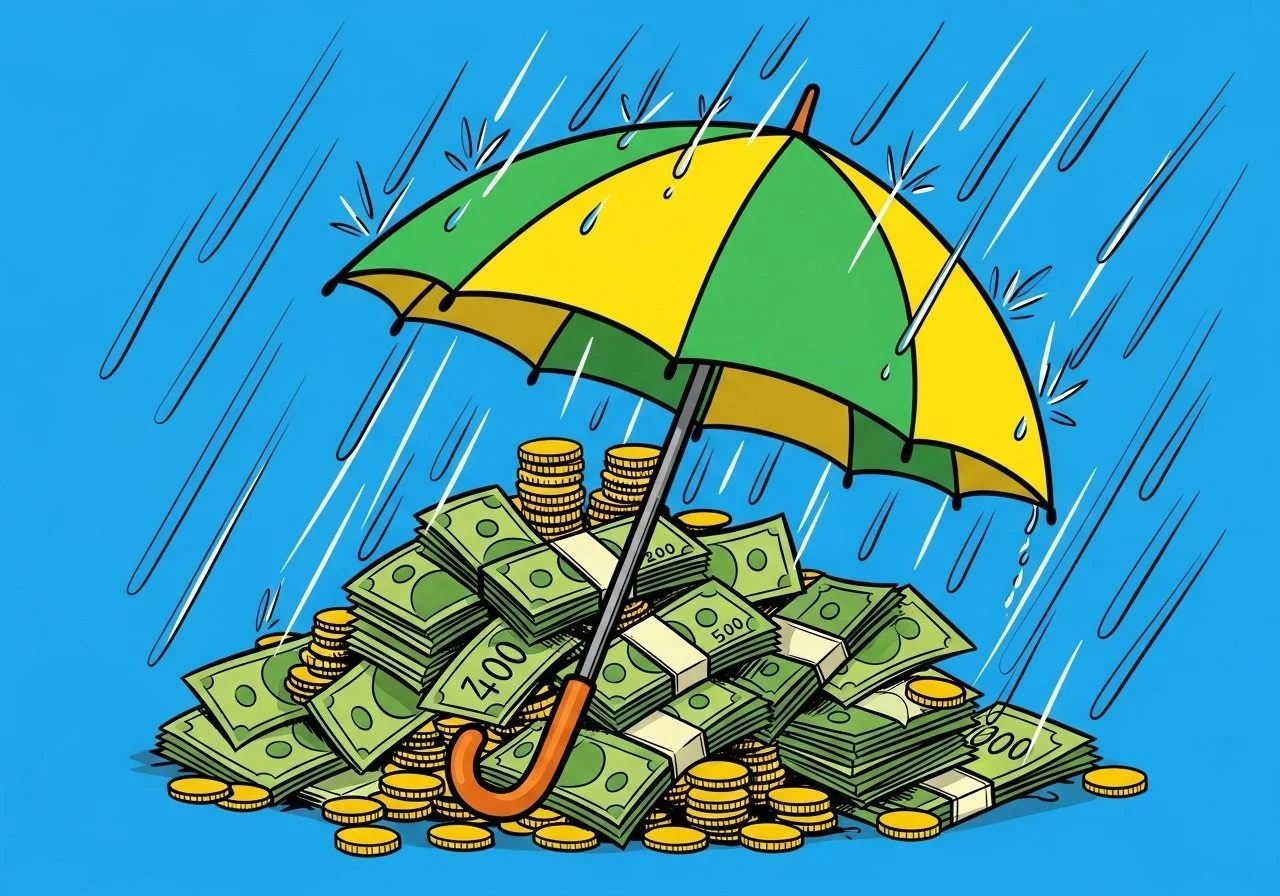
That’s why I’ve really leaned into building what I call an all-weather portfolio. In the chaotic and unpredictable world that we live in, I want to know that my portfolio can persevere through whatever the market throws at it.
Practically speaking, building an all-weather portfolio just comes down to owning different types of stocks across the dividend spectrum. Some holdings will perform well in certain environments, while others will carry the load in different ones.
Not every position needs to win at the same time. In fact, it’s likely that they won’t. They just need to co-exist and create balance.
I broke this down a lot more in a recent video where I go through my entire portfolio. But at a high level, my holdings each fall into one of four buckets: stalwarts, high-growth stocks, high-yield stocks, and what I call “double trouble” stocks.
Each of these four categories has a different financial profile. They all have different strengths and weaknesses. And they all play a different role in my portfolio. That’s the point.
I’m not really a big sports guy, but it’s actually not unlike forming a football team.
In building out your roster of players, you’re not going to draft 53 quarterbacks. Yes, you need offense. But you also need defense and special teams.
The thing that makes investing different from football, though, is that it’s not about winning the game. You can’t actually win the game of investing because there is no finish line. There is no limit to how big your portfolio can grow.
And this especially matters to me because I’m only 32 years old. I still have decades of compounding ahead of me, and to make sure I can actually play this game for the rest of my life, there’s one thing I absolutely can’t afford to do: I can’t get taken out of the game.
The first rule of compounding is to never interrupt it unnecessarily. And if you’re forced out of the game — financially or emotionally — the compounding stops.
But if I continue building out my collection of high-quality companies across different categories — and continue pursuing this all-weather approach — I’m pretty confident that I’ll be able to play the game for a long time.
Having said all of that, now I want to hear from you: If the market dropped 20% tomorrow, would you feel confident in your portfolio exactly as it is today? Write to me here and let me know.
Dividend Investing Democratized
Join thousands of savvy investors in the pursuit of early retirement. Get Retire With Ryne delivered straight to your inbox every week as you build your perpetually growing, cash-flowing dividend stock portfolio.
IN MY PORTFOLIO 📈
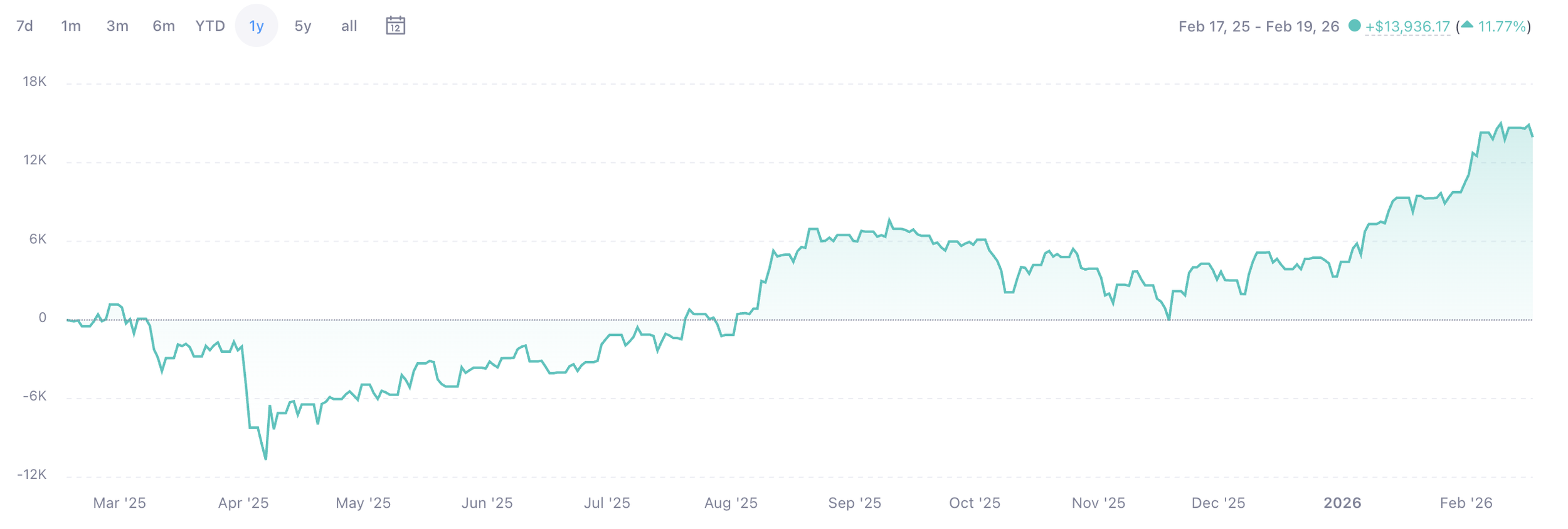
Start tracking your portfolio with Snowball Analytics today—free for 14 days! Plus, use code "rynewilliams" at checkout to get 10% off your subscription.
ICYMI 🎥
This Is What Real Financial Freedom Looks Like
In this episode of The Deep End, we sit down with our friend Ralph — a retiree who completely rebuilt the way he thinks about money, risk, and what financial freedom actually means.
CAREFULLY CURATED 🔍
📺 Betting On Rent - PPC Ian breaks down a high-yield dividend stock that just landed on his watchlist, and makes the case for why it might be a good buying opportunity.
🎧 Buffett's Blueprint - This episode of Squawk Pod dives into Warren Buffett’s life, investment philosophy, and the legacy he’s built over decades. A great listen if you want a mix of biography and timeless wisdom from one of the greatest investors ever.
📚 Thoughtful Positioning - Rather than just patting themselves on the back, Nightview Capital's 2025 letter breaks down lessons from past cycles and how that shapes their positioning today.
SINCE YOU ASKED 💬
"Would people prefer if SCHD paid out monthly vs. quarterly?"
- Trista | YouTube
This is such a great question, and I think it brings up a pretty hotly debated topic in the dividend investing community.
In short, yes, I do think people would prefer it if SCHD paid a dividend every month instead of every quarter. Every dividend that shows up in your account is a dopamine hit, so if given the option, most people would rather receive payments on a more frequent basis. And you really can’t blame them for that.
The problem with this preference, though, is that many people mistakenly believe that more frequent payments will somehow result in more money over time.
The argument is that the more frequently you get paid, the sooner you can put that money to work — and therefore the faster it will grow and compound your wealth. But if you actually run the numbers, that’s just not the case.
Looking at a hypothetical example using this dividend calculator, if you started with an initial investment of $1,000 and invested $100 every month over the next 20 years into an asset with a 3% dividend yield, 7% share price appreciation, and 7% dividend growth, you’d end up with $75,764 and would be generating $2,298 in annual dividends. That assumes a quarterly dividend distribution and reinvestment frequency.
Now, assuming everything else stays the same, and we simply change the distribution frequency from quarterly to monthly, after the same 20 years, you’d have $75,834 and would be generating $2,306 in annual dividends. That’s a negligible difference.
So the payment frequency doesn’t really move the needle. Still, the monthly payment advocates would argue that it matters because of the psychological benefits. They’ll say it’s easier, mentally, to budget in retirement if you’re getting payments every month instead of every quarter.
But is it really that difficult to receive $3,000 every quarter and plan your budget accordingly, versus receiving $1,000 every month instead? In retirement — assuming you’ve already built up hundreds of thousands of dollars, if not millions — is this simple budgeting math truly such an obstacle?
It may seem like a trivial thing to have such an opinion about. But I think the implications can be costly.
If you start believing that payment frequency matters too much, you may end up selecting investments based on how often they pay instead of on the quality of the underlying business or fund. And I think that’s backwards.
The quality of the investment should come first. Payment frequency shouldn’t even be a consideration, especially when, as we saw in the numbers, it doesn’t meaningfully change the outcome.
So yes, people would probably prefer that SCHD paid them every single month. Whether they should is a whole different conversation.
Have a question? Ask me here to see it featured in an upcoming newsletter.
LAST WORD 👋
Want to be a guest on The Deep End? We’re looking to feature everyday investors who’ve built meaningful portfolios through consistency, patience, and long-term thinking.
If you’ve been investing for a while and feel like your journey could help others see what’s possible, we’d love to learn more about you!
Just fill out this quick form here.