Disclaimer: This page contains some affiliate links that might just lead you to the promised land of awesomeness (or at least some cool products). I may receive commissions for purchases made through links in this post.
One question I get asked all the time is something along the lines of: Ryne, do you ever feel like your portfolio is too safe?
In other words, as a younger investor with a long time horizon and plenty of compounding years ahead of me, do I ever feel like I’m leaving money on the table by investing in dividend-paying stocks?
It’s a great question.
After all, there’s this pretty widespread belief that dividend stocks are chronic underperformers. A lot of investors assume that if you focus on dividend-paying companies, you’re basically submitting yourself to a life of subpar returns.
Now, to be fair, dividend stocks do tend to be a bit more on the defensive side. In many cases, they’re more mature businesses that have been around for a long time, some even dating back to the 1800s.
As a result, these businesses are usually at a different stage of the corporate life cycle than the “move fast, break things” type of companies that dominate the headlines at any given time. That disparity is partly where this misconception comes from.

Source: Procter & Gamble
With all of that said, my experience investing in dividend stocks over the past six years has pretty much been the opposite of what most people expect.
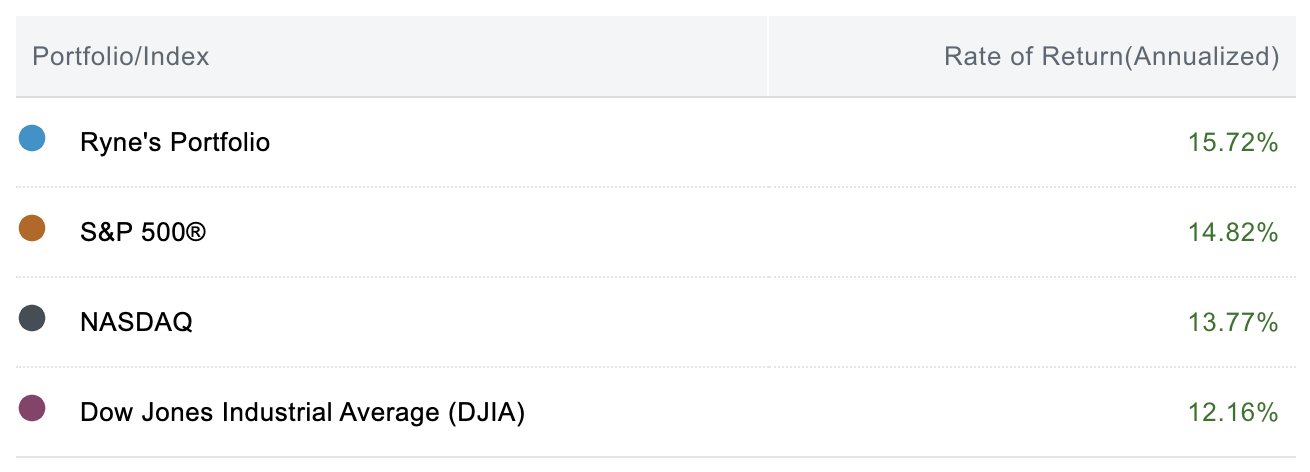
Believe it or not, if you look at the returns in my portfolio so far (dating back to October 15th, 2020), I’ve actually been able to outperform the market since I started seriously investing.
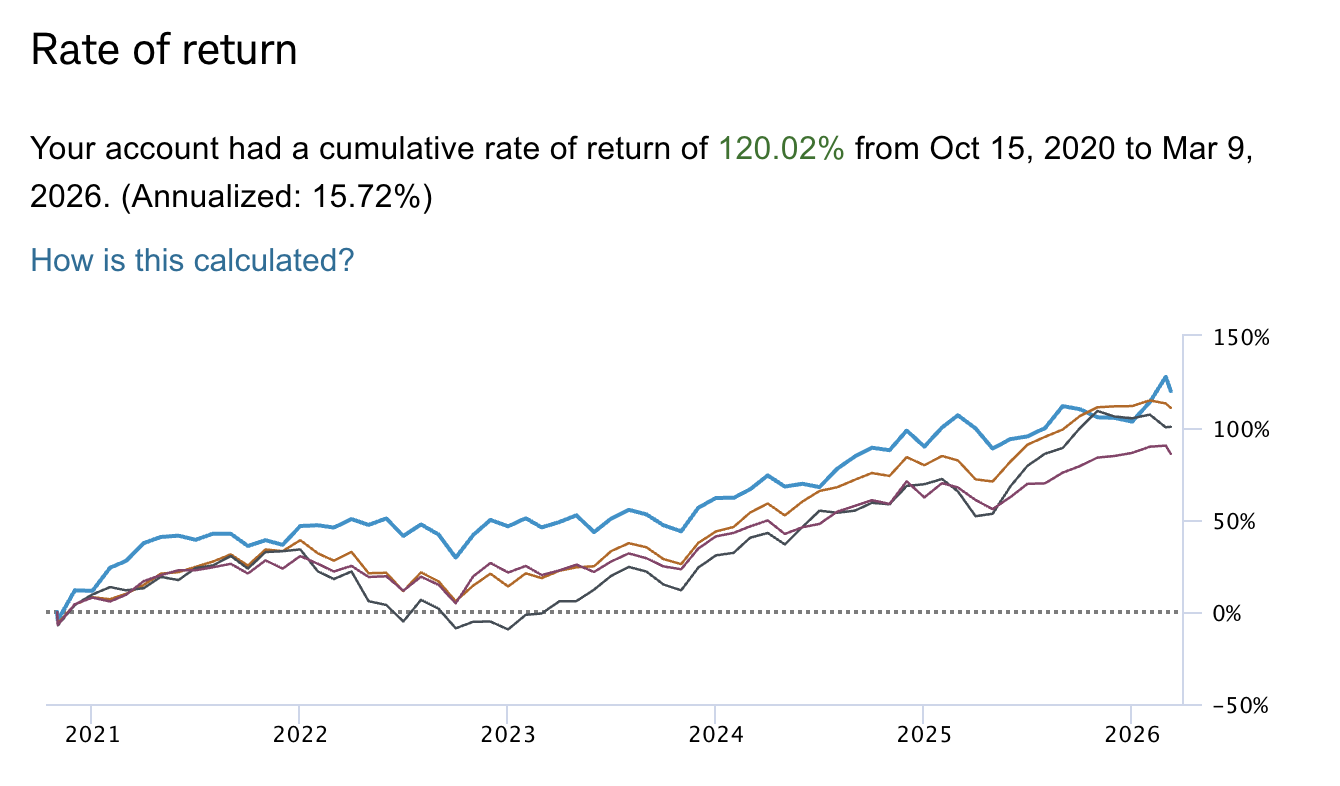
Source: Charles Schwab
Now, to be clear, I’m not showing you this to suggest that I’m the second coming of Warren Buffett or anything like that. Far from it — and I’m sure you won’t disagree.
But I think it’s worth sharing that everything I’ve learned about investing so far has been completely self-taught. When I first got into this stuff, I had no background in finance, no experience, and honestly no idea what I was doing.
Considering that, I’d say things have turned out pretty well so far.
Source: Charles Schwab
More than anything, what this experience has reinforced for me is that the best investing strategy is the one that fits you best. You have to find a method to the madness that you actually enjoy and can stick with for decades.
For me, that’s dividend investing. It fits like a glove.
I like owning profitable businesses that generate cash flow, and I will never get sick of seeing the passive income automatically show up in my account. In fact, I love it even more the longer I do this.
Now, I have no idea whether these market-beating returns will continue in the future. Nobody knows what the market is going to do from here.
But I think the fact that my portfolio has been able to outperform the market so far is proof of something important: Boring companies don’t have to mean boring returns.
Having said all of that, now I want to hear from you: Are dividend stocks a big part of your portfolio, or do you focus more on growth? Write to me here and let me know.
Dividend Investing Democratized
Join thousands of savvy investors in the pursuit of early retirement. Get Retire With Ryne delivered straight to your inbox every week as you build your perpetually growing, cash-flowing dividend stock portfolio.
IN MY PORTFOLIO 📈
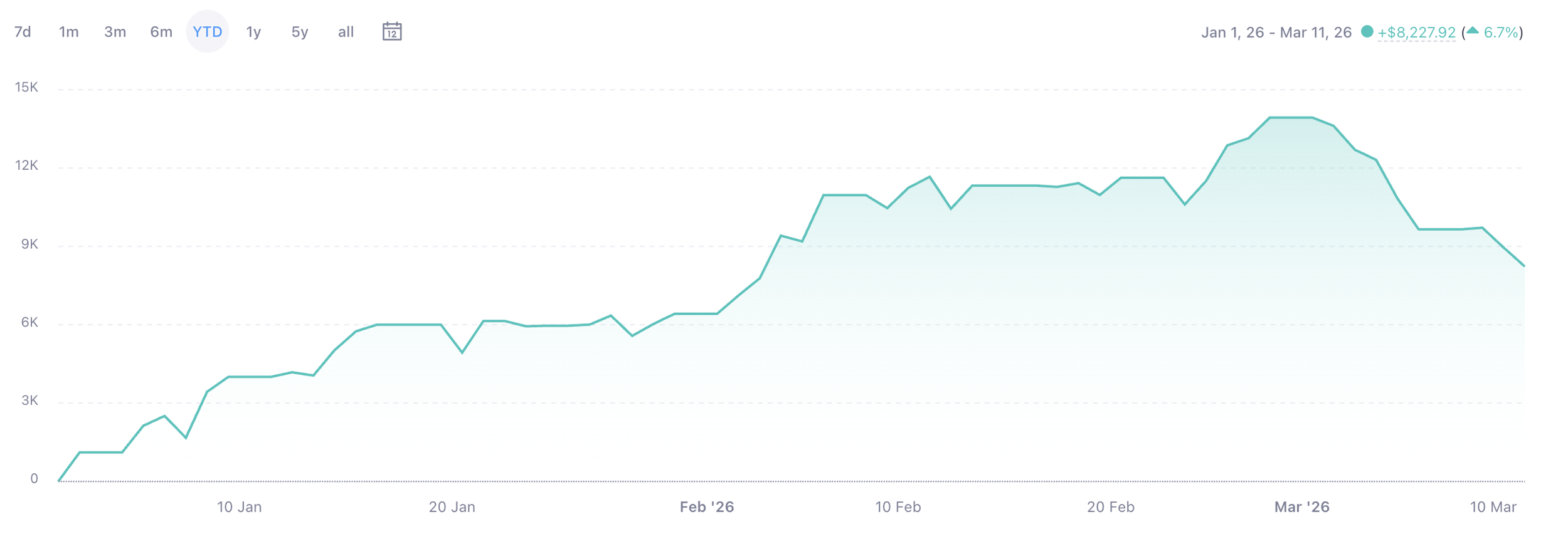
See my full portfolio with all of my holdings, trades, and dividends on Snowball Analytics! Plus, use code "rynewilliams" at checkout to get 10% off your subscription.
ICYMI 🎥
This Type of Fear Is Holding Investors Back
In this episode of The Deep End, we dive into the recent volatility in the stock market and why neither of us are losing sleep over it. We also talk about how long-term investors should think about market swings, the type of fear that often holds investors back, and why staying curious is one of the most important traits you can develop as an investor.
SINCE YOU ASKED 💬
"I'm 21, and I've only been investing for a year. How many stocks should I have in my portfolio?"
- Lee | YouTube
This is a great question, and the truth is that there really isn't one “correct” number. Some investors prefer a more concentrated portfolio, while others opt for more diversification, so there’s definitely some personal preference involved.
With that said, I tend to consider three main variables when thinking about this question.
The first is the size of your portfolio. Generally speaking, the larger your portfolio becomes, the more I think diversification tends to make sense.
As your wealth grows, preserving that wealth becomes increasingly important, and diversification is one way to make your portfolio more resilient (to an extent).
On the other side of that, if you have a smaller portfolio, it doesn't make as much sense to spread yourself across too many holdings. In other words, if you only have a few thousand dollars invested, owning 20 or 30 different stocks is probably overkill.
The second factor in all of this is what you actually own. Are you mostly invested in ETFs, or are you building a portfolio of individual stocks?
If your portfolio is primarily ETFs, you really don’t need many positions at all. ETFs are already diversified by design, so owning just a few funds (probably three or four max) still gives you exposure to hundreds or even thousands of companies.
Now, the third variable to consider is how involved you want to be as an investor.
If your portfolio is mostly individual stocks, that's going to require more time and attention. After all, you need to stay on top of the businesses you own and keep an eye on how they’re performing over time.
There are only so many hours in the day though. So the more companies you own, the harder it will be to stay up to date on all of them.
If you’d rather take a more hands-off approach, this is where ETFs come in handy. And once again, if ETFs make up most of your portfolio, you really don’t need too many.
So overall, when it comes to how many stocks you should own, I think it ultimately comes down to balancing those three things: your portfolio size, what types of investments you own, and how involved you want to be.
The good news is that this is something you’ll naturally settle into over time. As you get further down the road in your investing journey, you’ll come to find what I like to call your “diversification sweet spot.”
This is the point where your portfolio doesn’t feel overly concentrated, but it also doesn’t feel so spread out that it becomes difficult to manage. And once you find that balance, it's a pretty easy thing to maintain.
Have a question? Ask me here to see it featured in an upcoming newsletter.
LAST WORD 👋
After a very long hiatus, I just started posting on X again and am really trying to post consistently on there. I’d love to connect with you! 🤝